
What Insulation Thickness for Walls, Roof and Floor? Guide with Tables
11 marca 2026 | Heating
How thick does wall insulation need to be? How many centimetres of mineral wool on the roof? What thickness of XPS under the floor? These are questions every investor, designer and contractor asks when planning a new build or renovation. The answer depends on the required energy standard and the insulation material chosen. This guide contains ready-to-use thickness tables for three standards: standard building (Polish WT 2021 regulations), energy-efficient and passive. To check a specific layer configuration, use the thermal transmittance U-value calculator.
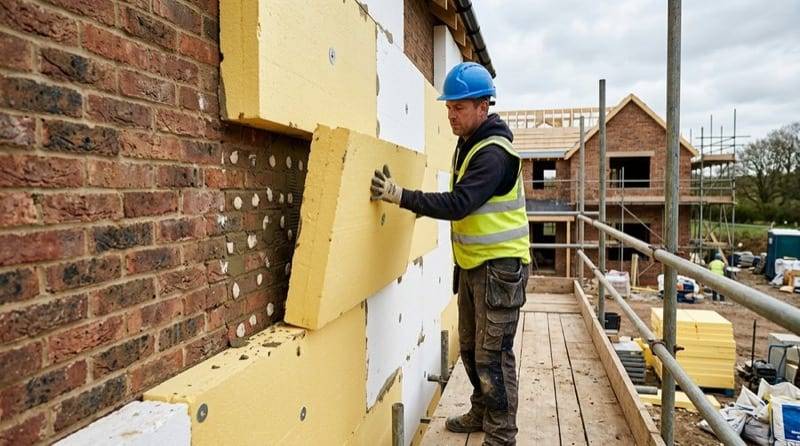
Energy Standards — What Do the Requirements Mean?
Polish technical regulations (Warunki Techniczne, WT 2021) set maximum U-values for building elements in new buildings. The lower the U-value, the better the insulation and the lower the heating costs. Beyond the mandatory standard, there are voluntary higher standards — energy-efficient and passive — required when applying for grants from the Polish "Czyste Powietrze" (Clean Air) programme.
| Standard | U max. wall | U max. roof/ceiling | U max. floor |
|---|---|---|---|
| Standard building (WT 2021) | 0.20 W/(m²·K) | 0.15 W/(m²·K) | 0.30 W/(m²·K) |
| Energy-efficient building | 0.15 W/(m²·K) | 0.10 W/(m²·K) | 0.20 W/(m²·K) |
| Passive building | 0.10 W/(m²·K) | 0.07 W/(m²·K) | 0.12 W/(m²·K) |
External Wall Insulation Thickness
Hollow clay block wall (λ = 0.22 W/(m·K)) + EPS polystyrene
25 cm hollow clay block wall with EPS facade insulation (λ = 0.038 W/(m·K)):
| Standard | Required U | EPS thickness | Achieved U |
|---|---|---|---|
| WT 2021 (standard) | ≤ 0.20 | 15 cm | 0.19 W/(m²·K) |
| Energy-efficient | ≤ 0.15 | 21 cm | 0.15 W/(m²·K) |
| Passive | ≤ 0.10 | 34 cm | 0.10 W/(m²·K) |
Autoclaved aerated concrete wall (λ = 0.14 W/(m·K)) + EPS polystyrene
24 cm AAC block wall with EPS facade insulation (λ = 0.038 W/(m·K)):
| Standard | Required U | EPS thickness | Achieved U |
|---|---|---|---|
| WT 2021 (standard) | ≤ 0.20 | 12 cm | 0.20 W/(m²·K) |
| Energy-efficient | ≤ 0.15 | 19 cm | 0.15 W/(m²·K) |
| Passive | ≤ 0.10 | 31 cm | 0.10 W/(m²·K) |
EPS vs mineral wool — comparison at the same thickness
25 cm hollow clay block wall with 15 cm insulation:
| Insulation 15 cm | λ of material | Achieved U | Meets WT 2021? |
|---|---|---|---|
| Graphite EPS polystyrene | 0.031 W/(m·K) | 0.16 W/(m²·K) | ✓ Yes (with margin) |
| Standard EPS polystyrene | 0.038 W/(m·K) | 0.19 W/(m²·K) | ✓ Yes |
| Mineral wool | 0.040 W/(m·K) | 0.20 W/(m²·K) | ✓ Yes |
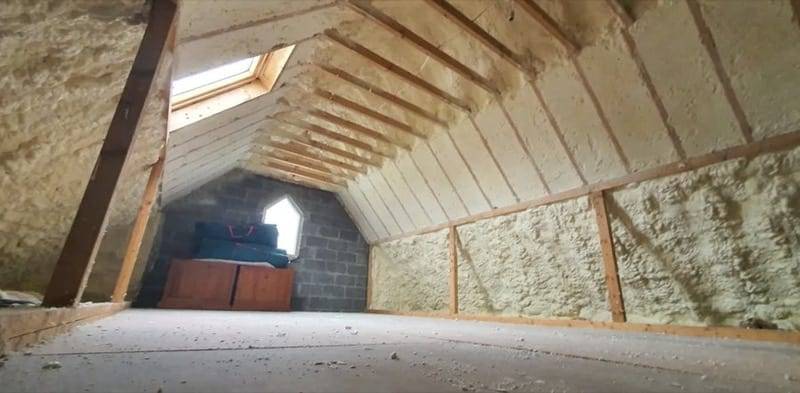
Roof Insulation Thickness
The roof has the strictest U requirements (≤ 0.15 W/(m²·K) in WT 2021) because heat rises and escapes most intensively through the roof.
Pitched roof — mineral wool between and over rafters
Layout: plasterboard 12.5 mm + mineral wool between rafters (200 mm rafter depth) + mineral wool over rafters + membrane + battens + tiles:
| Standard | Required U | Between rafters | Over rafters | Achieved U |
|---|---|---|---|---|
| WT 2021 (standard) | ≤ 0.15 | 20 cm | 5 cm | 0.14 W/(m²·K) |
| Energy-efficient | ≤ 0.10 | 20 cm | 15 cm | 0.10 W/(m²·K) |
| Passive | ≤ 0.07 | 24 cm | 26 cm | 0.07 W/(m²·K) |
Flat roof — PIR insulation boards
PIR boards (λ = 0.023 W/(m·K)) are the most efficient material for flat roofs:
| Standard | Required U | PIR thickness | Achieved U |
|---|---|---|---|
| WT 2021 (standard) | ≤ 0.15 | 15 cm | 0.14 W/(m²·K) |
| Energy-efficient | ≤ 0.10 | 22 cm | 0.10 W/(m²·K) |
| Passive | ≤ 0.07 | 32 cm | 0.07 W/(m²·K) |
Floor Insulation Thickness
Ground floor slab — XPS polystyrene under screed
Layout: 6 cm cement screed + XPS (λ = 0.033 W/(m·K)) + 10 cm blinding concrete + ground:
| Standard | Required U | XPS thickness | Achieved U |
|---|---|---|---|
| WT 2021 (standard) | ≤ 0.30 | 10 cm | 0.29 W/(m²·K) |
| Energy-efficient | ≤ 0.20 | 15 cm | 0.20 W/(m²·K) |
| Passive | ≤ 0.12 | 26 cm | 0.12 W/(m²·K) |
Floor above unheated basement — EPS under slab
Layout: 20 cm RC slab + EPS polystyrene (λ = 0.038 W/(m·K)) + 5 cm screed:
| Standard | Required U | EPS thickness | Achieved U |
|---|---|---|---|
| WT 2021 (standard) | ≤ 0.25 | 14 cm | 0.24 W/(m²·K) |
| Energy-efficient | ≤ 0.20 | 18 cm | 0.19 W/(m²·K) |
| Passive | ≤ 0.12 | 30 cm | 0.12 W/(m²·K) |
Common Mistakes When Choosing Insulation Thickness
1. Buying material without checking the declared λ — Products with the same name can have λ from 0.031 to 0.042 W/(m·K). Always check the DoP before calculating.
2. Rounding down to save money — The cost of insulation is 30–40% of the total. The difference between 12 and 15 cm is a few hundred zloty on an entire house, while higher heating bills over 40 years means thousands of zloty extra.
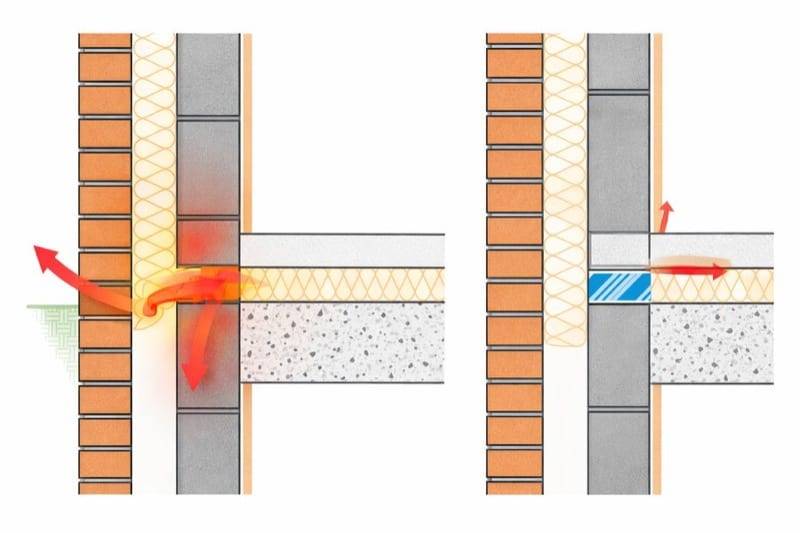
3. Ignoring thermal bridges — Ring beams, lintels and reinforced concrete columns (λ = 2.0 W/(m·K)) can raise the effective U of a whole wall by 10–40%.
4. Using EPS instead of XPS in damp locations — EPS absorbs water and loses its insulating properties. Use XPS or PIR for ground floors, plinth areas, foundations and inverted roofs.
How to Check Calculations for Your Building Element
The thicknesses in the tables above are typical values for standard layer configurations. Every building is different. To get an accurate result for your specific solution, use the thermal transmittance U-value calculator. You can test different variants — for example, how much you gain by adding 3 cm more insulation.
Summary
- WT 2021 (standard): walls ≤ 0.20, roof ≤ 0.15, floor ≤ 0.30 W/(m²·K)
- Hollow clay block wall (λ = 0.22) needs 15 cm EPS to meet WT 2021 standard; 21 cm for energy-efficient
- AAC wall (λ = 0.14) needs 12 cm EPS to meet WT 2021 standard; 19 cm for energy-efficient
- Pitched roof needs min. 25 cm mineral wool total (between and over rafters) for WT 2021; 35 cm for energy-efficient
- Use XPS under ground floor slabs — moisture resistant unlike EPS
- Passive building requires 30–34 cm wall insulation and 32 cm PIR or 50 cm mineral wool for the roof
- Always verify λ from the product DoP — not all materials have the same parameters
Check exact calculations for your building element in the U-value calculator.
Back to articles list