
Underfloor vs Radiator Heating - Comparison, Costs and System Selection
7 kwietnia 2026 | Heating
Choosing a heating system is one of the most important decisions during the construction or renovation of a home. Underfloor heating and radiator heating are the two most popular solutions, and each has its strengths and weaknesses. In this article, we provide a detailed comparison of both systems in terms of costs, comfort, energy efficiency and compatibility with heat sources, to help you make an informed decision.
If you want to quickly calculate the installation parameters, use our underfloor heating calculator or radiator selection calculator.
How Both Systems Work
Radiator Heating
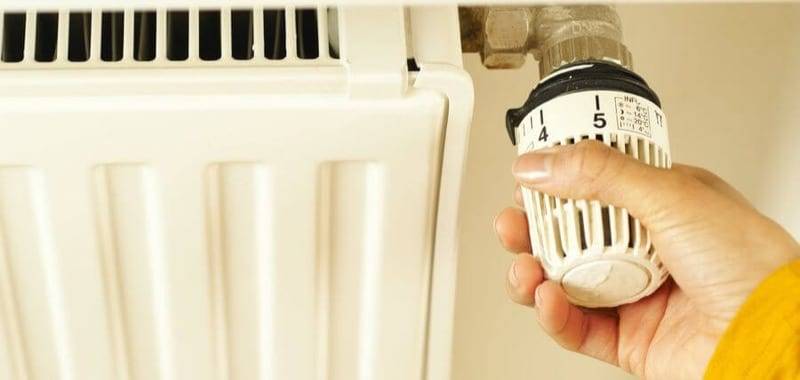
Radiator heating is a classic system in which heat is delivered to rooms using radiators, most commonly mounted beneath windows or on exterior walls. Radiators transfer heat to the surroundings primarily through convection (rising warm air) and partly through radiation. The most popular types of radiators are panel, sectional (aluminium or steel) and decorative (bathroom ladder-style) radiators.
The supply temperature of radiators in a typical installation ranges from 55°C to 75°C, and the return temperature from 40°C to 55°C. Thanks to the high temperatures, radiators react quickly to changes in heat demand.
Underfloor Heating
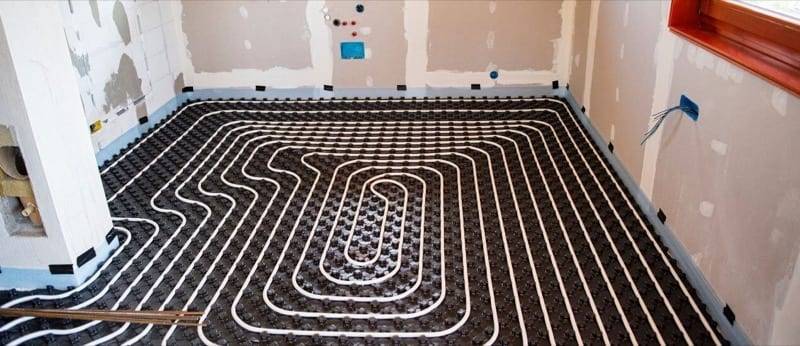
Underfloor heating is a surface system in which pipes carrying warm water (or heating cables in the electric variant) are embedded in a concrete screed beneath the floor. Heat is emitted into the room primarily through radiation, which ensures a very even temperature distribution.
The supply temperature of underfloor heating is significantly lower, typically ranging from 30°C to 45°C, and the return temperature from 25°C to 35°C. The low supply temperature means that this system works excellently with heat pumps and other low-temperature heat sources.
Comparison of Both Systems' Parameters
The table below presents a summary of the most important technical and operational parameters of both heating systems.
| Parameter | Underfloor heating | Radiator heating |
|---|---|---|
Installation cost (materials + labour) | 120–200 PLN/m² | 80–150 PLN/m² |
Operating costs | Lower by 10–20% | Higher (higher supply temp.) |
Thermal comfort | Very high (heat from below) | Good (localised heat sources) |
Thermal inertia | High (slow heating and cooling) | Low (fast response) |
Heat pump compatibility | Excellent (low supply temp.) | Limited (requires low-temperature radiators) |
Impact on room height | Reduces by 7–12 cm (screed + insulation) | No impact |
Interior design | Full freedom (no visible elements) | Radiators take up wall space |
Installation lifespan | 50+ years (PEX/PERT pipes) | 25–30 years (steel radiators) |
Typical Operating Temperatures
The supply and return temperatures are crucial for the efficiency of the entire heating system, and especially for the performance of the heat source. The lower the supply temperature, the higher the COP of the heat pump and the lower the operating costs.
| Parameter | Underfloor heating | Radiator heating |
|---|---|---|
Supply temperature | 30–45°C | 55–75°C |
Return temperature | 25–35°C | 40–55°C |
Max. floor surface temperature | 29°C (occupied zones) | Not applicable |
Heat pump COP (approximate) | 4.0–5.0 | 2.5–3.5 |
The maximum floor surface temperature in occupied zones should not exceed 29°C according to the PN-EN 1264 standard. In peripheral zones (along exterior walls) up to 35°C is permitted, and in bathrooms up to 33°C.
Advantages and Disadvantages of Underfloor Heating
Advantages
- Even temperature distribution -- heat is spread across the entire floor surface, so there are no cold zones in the room. The temperature distribution is close to ideal: warmer at the floor, cooler at the ceiling.
- Energy efficiency -- thanks to the low supply temperature (30–45°C), the system achieves higher efficiency, especially in combination with a heat pump. Savings on heating bills are typically 10–20% compared to radiators.
- Complete design freedom -- no visible heating elements on the walls allows for unrestricted furniture placement and interior decoration.
- Silent system -- underfloor heating generates no noise, unlike radiators, which can produce sounds from water flow.
- Long lifespan -- PEX or PE-RT pipes used in underfloor heating have a lifespan exceeding 50 years with proper operation.
- Hygiene -- the low heating surface temperature (up to 29°C) does not cause intensive dust circulation, which is beneficial for allergy sufferers.
Disadvantages
- High thermal inertia -- the system responds slowly to temperature changes. Heating the floor from a cold state takes several hours, making it difficult to quickly adjust the temperature to changing conditions.
- Higher investment cost -- the installation is 30–50% more expensive compared to radiator heating due to the need for additional screed and insulation.
- Reduced room height -- the insulation and screed layer takes up 7 to 12 cm of room height, which can be a problem in buildings with low ceilings.
- Limitations in floor covering selection -- not all flooring materials conduct heat well. Ceramic and stone tiles work best, while laminate and wooden floorboards must be designed for underfloor heating (max. thermal resistance of the floor covering up to 0.15 m²K/W).
- More difficult repairs -- in case of a failure, accessing the pipes requires breaking up the floor, which is costly and inconvenient.
Advantages and Disadvantages of Radiator Heating
Advantages
- Fast response to temperature changes -- radiators heat up a room within minutes, allowing flexible heating control, e.g. lowering the temperature at night and quickly raising it in the morning.
- Lower investment cost -- both material and installation costs are lower than for underfloor heating. Installing radiators in a 120 m² house typically costs 10,000–18,000 PLN.
- No impact on room height -- radiators are mounted on walls and do not require additional screed.
- Easy modernisation -- replacing radiators or changing their layout is simple and relatively inexpensive.
- Versatility -- radiators can be used in both new and existing buildings without major construction work.
Disadvantages
- Uneven heat distribution -- radiators mainly heat the air in their immediate vicinity, leading to warm and cold zones within the room.
- Greater dust circulation -- convection of warm air above the radiator lifts dust particles, which can be troublesome for people with allergies.
- Taking up space -- wall-mounted radiators limit the freedom of interior design and furniture placement.
- Higher operating costs -- the higher supply temperature means lower heat source efficiency, especially for heat pumps, resulting in higher bills.
Compatibility with Heat Sources
The choice of heating system should be closely linked to the planned heat source. This is one of the most important factors that often determines the final choice.
Heat Pump
A heat pump achieves its highest efficiency (COP) at low supply temperatures. Underfloor heating with a supply temperature of 30–35°C is an ideal combination, where the COP can reach 4.5–5.0. Radiators requiring 55–75°C significantly reduce the heat pump COP to 2.5–3.5, increasing electricity consumption by as much as 40–60%.
If you opt for a heat pump with radiators, it is worth using low-temperature radiators (e.g. panel radiators with fans) designed to operate at a supply of 45°C. However, the cost of such radiators is higher than standard ones.
Condensing Gas Boiler
A condensing boiler achieves its highest efficiency when the return temperature drops below 57°C (the dew point temperature of natural gas flue gases). Underfloor heating with a return temperature of 25–35°C ensures constant operation in condensing mode, raising the boiler efficiency to 98–107% (referenced to the net calorific value). Radiators can also work with condensing boilers, but operation in condensing mode is not as stable.
Solid Fuel Boiler
Solid fuel boilers (biomass, pellets) generate higher temperatures and work better with radiators. Underfloor heating in this case requires a mixing valve (e.g. three-way) to reduce the supply temperature to a safe level below 45°C.
Solar Collectors and Photovoltaics
Low-temperature heat sources, such as solar collectors supporting heating, work best with underfloor heating due to the low required supply temperature. In the case of photovoltaics powering a heat pump, the benefits of underfloor heating are twofold: high COP of the heat pump and the ability to accumulate heat in the massive screed.
Hybrid System -- Combining Both Solutions
In practice, hybrid systems where underfloor and radiator heating coexist in one building are increasingly common. This is a compromise solution that allows the advantages of both systems to be utilised.
Typical Hybrid Layout
- Underfloor heating -- ground floor of the house (living room, kitchen, ground floor bathroom), where we spend the most time and value thermal comfort.
- Radiators -- upper floor (bedrooms, study), where quick temperature regulation is more important and these rooms are heated less frequently.
Technical Requirements of a Hybrid System
A hybrid system requires a mixing group (three-way or four-way valve with a circulation pump) to reduce the supply temperature for the underfloor circuits. Radiators are supplied directly from the boiler or heat pump, while the underfloor circuits receive water at a lower temperature after passing through the mixing valve.
For the correct selection of pipe diameters in a hybrid system, our pipe diameter calculator will be helpful. Comprehensive design of a heating installation with multiple circuits is possible with our heating project calculator.
Installation Costs -- Detailed Comparison
The actual installation costs of heating depend on many factors: the size of the house, the region of Poland, the standard of materials and contractor rates. Below we present approximate costs for a detached house with a heated area of 120 m².
Underfloor Heating (120 m² house)
- PEX/PE-RT pipes, manifolds, controls: 8,000–12,000 PLN
- Floor insulation (polystyrene + foil): 3,000–5,000 PLN
- Concrete screed: 4,000–6,000 PLN
- Labour (pipe laying, connections): 5,000–8,000 PLN
- Total: 20,000–31,000 PLN (165–260 PLN/m²)
Radiator Heating (120 m² house)
- Panel radiators (10–14 units): 4,000–8,000 PLN
- Supply pipes, fittings, valves: 2,000–4,000 PLN
- Thermostatic heads: 500–1,500 PLN
- Labour (radiator installation, pipe routing): 3,000–5,000 PLN
- Total: 9,500–18,500 PLN (80–155 PLN/m²)
Operating Costs
The difference in operating costs depends primarily on the heat source. With a heat pump, underfloor heating is 15–25% cheaper to run thanks to the higher COP. With a gas boiler, the difference is smaller at approximately 5–15%. With a solid fuel boiler, the difference in operating costs is minimal.
It is worth noting that underfloor heating allows the air temperature in the room to be reduced by 1–2°C while maintaining the same thermal comfort (warm floor effect), which additionally reduces heat losses through ventilation and transmission through building partitions.

Popular Myths About Underfloor Heating
Myth 1: Underfloor Heating Is Difficult to Install
Installing underfloor heating is no more complicated than a radiator installation -- it simply requires a different approach. An experienced installer completes a full underfloor installation in a 120 m² house within 2–3 working days. Nowadays, underfloor heating is the standard in new detached houses -- most designers include it as the primary heating solution.
Myth 2: Underfloor Heating Is Unhealthy and Harmful to Feet
This myth originates from times when underfloor heating was installed with technological errors -- too high a supply temperature and too wide pipe spacing. Properly designed and installed underfloor heating maintains the floor surface temperature in the range of 24–29°C, which is safe and comfortable.
Underfloor heating operating at low temperatures does not cause health problems. At a surface temperature of up to 29°C, there is no excessive dilation of blood vessels in the feet or overheating of the body. Additionally, the low heating surface temperature reduces dust and allergen circulation compared to convective radiators, which is beneficial for people with allergies and asthma.
Myth 3: Underfloor Heating Requires a Specific Heat Source
Underfloor heating works with any heat source: a heat pump, gas boiler, solid fuel boiler, or even solar collectors. The only requirement is the use of an appropriate mixing valve to reduce the supply temperature to a safe level. A heat pump is the preferred heat source due to its highest efficiency at low temperatures, but it is not the only option.
Myth 4: You Cannot Lay Wood on a Floor with Underfloor Heating
Parquet and wooden floorboards can be used with underfloor heating, provided certain requirements are met. The wood should have a moisture content below 9%, and the thermal resistance of the floor covering should not exceed 0.15 m²K/W. Wood species with a low shrinkage coefficient work best, such as oak, merbau or bamboo. The boards should be glued to the substrate, not installed on a floating underlay.
Underfloor Heating in Existing Buildings -- Retrofitting
Installing underfloor heating in an existing building is possible but requires taking into account several significant limitations.
When Retrofitting Is Worthwhile
- Major renovation -- if you are planning to replace floors anyway, adding underfloor heating does not generate large additional costs.
- Building with high ceilings -- 7–12 cm of height is needed for insulation and screed; with room heights of 2.7 m or more, this is acceptable.
- Changing the heat source to a heat pump -- underfloor heating significantly improves the efficiency of a heat pump.
When It Is Better to Keep Radiators
- Low rooms (below 2.5 m) -- the additional screed and insulation layer may reduce the height below the required minimum (2.2 m according to Technical Conditions).
- Renovation of a single room -- connecting a single underfloor circuit to an existing radiator installation requires a mixing group and may not be cost-effective.
- Historic floors -- if the floor has historical or artistic value, it is not worth disturbing it.
Dry Installation Systems
An alternative to traditional underfloor heating in a wet system (in screed) is a dry installation system. Pipes are laid in special boards (e.g. polystyrene with milled channels or aluminium heat diffusers), and the floor covering is laid directly on top. The thickness of such a system is only 2–3 cm, which significantly reduces the loss of room height. The disadvantage is lower heating output per square metre and higher material costs.
Which System to Choose? Practical Guidelines
There is no single universal solution. The choice should consider the specific conditions of the building, the planned heat source and the usage pattern.
Choose underfloor heating when:
- you are building a new house and planning a heat pump,
- you value thermal comfort and free interior design,
- the house is well insulated (low heating output per m²),
- you are planning ceramic or stone flooring.
Choose radiator heating when:
- you are renovating an existing building with low rooms,
- you need quick temperature regulation in individual rooms,
- the investment budget is limited,
- you use a solid fuel boiler as the main heat source.
Consider a hybrid system when:
- you want to combine the comfort of underfloor heating on the ground floor with quick regulation on the upper floor,
- some rooms have limited height while others allow for a screed,
- you are planning a heat pump but want to maintain flexibility in less-used rooms.
Summary
Underfloor and radiator heating are proven systems, each with its own applications. Underfloor heating provides higher thermal comfort and better energy efficiency, especially in combination with a heat pump, but involves higher investment costs and greater thermal inertia. Radiator heating is cheaper to install, responds faster to temperature changes and is well suited to renovations.
Regardless of the chosen system, correct installation design is of key importance. Use our underfloor heating calculator to calculate pipe spacing, flow rates and heating output for individual loops, or the radiator selection calculator to select the right radiators for each room. Comprehensive design of heating installations with multiple circuits is possible with our heating project calculator.
Back to articles list