
PVC Pipes - Polyvinyl Chloride
30 listopada 2022 | Pipes
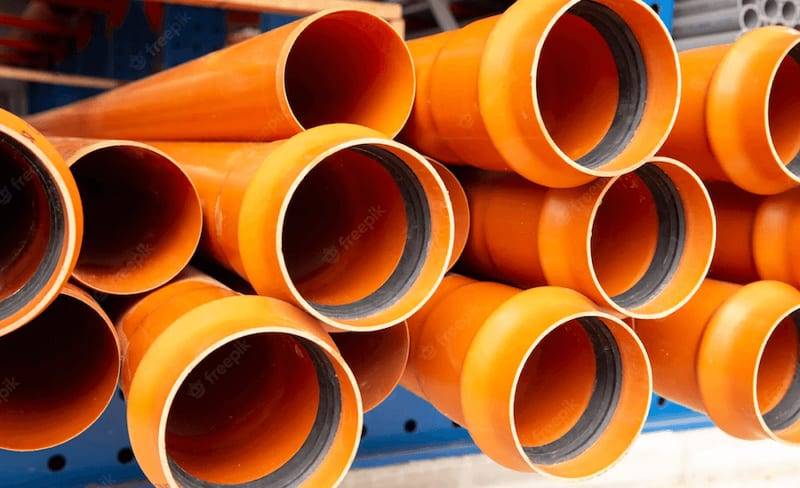
PVC Pipes - Pipes made of this material are most commonly associated with sewage systems. And that's really the case. This is the material most commonly found in sewage systems, both internal and external networks.
History of PVC Material
The history begins peculiarly in two separate years - 1838 and 1872 - when French physicist Henri Victor Regnault and German chemist Eugen Baumann first (and second) discovered PVC. Neither of them pursued their discovery, but in both cases, the polymer materialized as a "white solid" in flasks filled with gaseous vinyl chloride.
After these independent discoveries, no one mastered the use of PVC in commercial applications until 1913, when German inventor Friedrich Heinrich August Klatte decided to patent the first material. His method of polymerizing vinyl chloride used sunlight, and over the next few decades, companies worldwide began experimenting where Klatte's patent seemed inapplicable.
Around the beginning of the 20th century, B.F. Goodrich hired industrial scientist Waldo Semon to develop a novel, synthetic alternative to increasingly expensive natural rubber. Experiments began with polyvinyl chloride, but the project was soon threatened by the 1920 recession. That's when Semon came up with an amazing idea: using PVC as a waterproof coating for fabrics. Soon, sales of this material skyrocketed, with peak demand occurring at the beginning of World War II, when PVC was used as an insulator for electrical wires on military ships.
In the 1950s, PVC production surged worldwide. Particularly five companies began testing revolutionary applications of "vinyl" PVC, finding new uses for the material in inflatable structures and fabric coatings. The construction industry quickly adopted this durable plastic, largely due to its resistance to light, chemicals, and corrosion, making it a first-rate commodity for pipe construction.
PVC Today
The third most commonly used synthetic polymer, PVC, is produced and used worldwide in quantities of 40 million tons annually. Its main application is pipe production, and thus water transport in various applications (most commonly sewage - at least in Poland). What is it made of, what makes it a widely sought-after product? PVC stands for polyvinyl chloride. It is a chlorinated hydrocarbon polymer. In its natural state, it is rigid and brittle. However, when combined with additives such as plasticizers, it becomes more elastic and plastic.
Some of its applications include electrical insulation, medical tubing, flooring, furniture, signage, and as a rubber substitute. However, its most widespread application is in pipe production, which are used in water supply, sewage, and irrigation.
PVC Pipes
Unplasticized polyvinyl chloride is used for pipe production, characterized by high resistance to chemical and mechanical action of water, aqueous solutions, and most anhydrous acids, fats, mineral oils, and industrial gases. The advantages of this material include low weight compared to rigid pipes (ceramic, cast iron), high flexibility, good hydraulic properties, high abrasion resistance, ease of mechanical processing, resistance to chemical aggressiveness of sewage, tightness, and resistance to stray currents. The disadvantages of this material include brittleness at low temperatures and high thermal expansion. Polyvinyl chloride is commonly used for the production of sewage pipes, both for internal building installations and external networks.
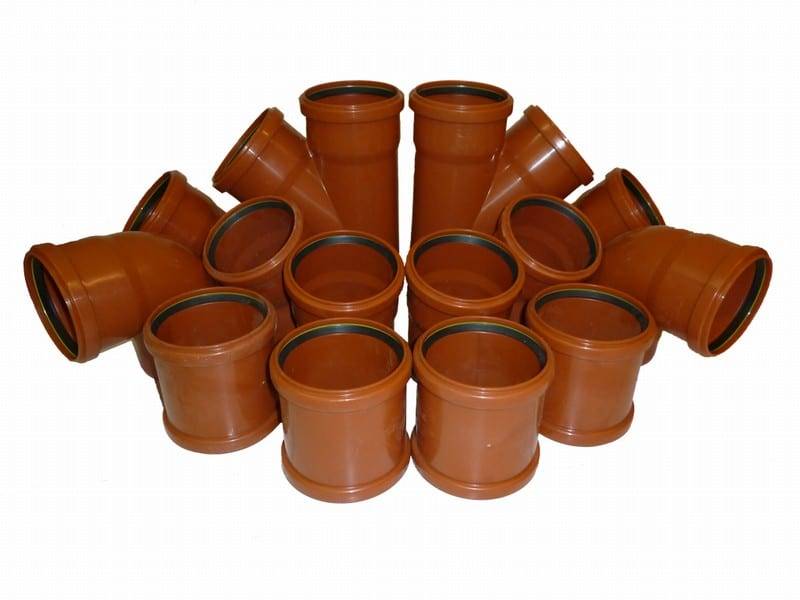
For the construction of sewage systems discharging domestic and industrial wastewater, PVC pipes complying with standards PN-EN 1401-1:2009 and PN-EN 13476-2 are used. PVC pipes are most commonly joined using sockets, in which seals are factory-installed (e.g., a sealing ring made of TPE elastomer). PVC-U sewage pipes for sewage systems come in various ring stiffness classes, which affect how much load the pipe can carry without destructive deformation. This should be taken into account when designing shallow sewage systems under roads, especially those with heavy traffic. The most common classes are SN2, SN4, SN8, and SN12.
Back to articles list