
Steel pipes in sanitary installations - types, standards, and applications
7 kwietnia 2026 | Pipes
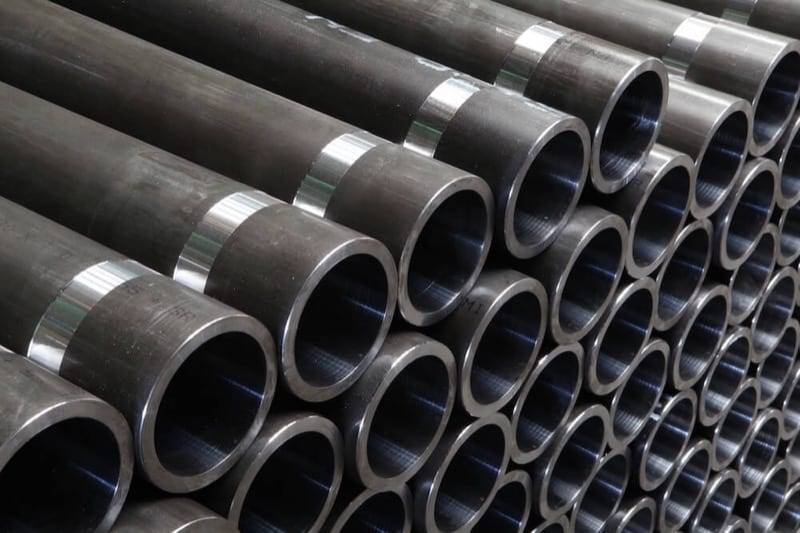
Steel pipes have been the foundation of sanitary, heating, and gas installations for over a hundred years. Despite the growing share of plastics, steel remains an irreplaceable material wherever exceptional mechanical strength, resistance to high temperatures, or compliance with fire safety regulations is required. In this article, we discuss the types of steel pipes, their technical parameters, standards, joining methods, and situations where steel is still the best choice.
If you are designing a heating installation and need to select pipe diameters, use our pipe diameter selection calculator. To calculate the water capacity of pipes, the pipe capacity calculator will come in handy.
A brief history of steel pipes
The beginnings of steel pipe production date back to the mid-19th century. In 1855, the invention of the Bessemer converter enabled mass production of steel, opening the way to manufacturing pipes in large quantities. The first pipes were made by rolling steel sheets and riveting seams. In 1920, electric welding of pipes began, and the 1930s brought dynamic development of this technology. From the 1950s onwards, welded steel pipes became the standard for water and heat transmission worldwide.
In Poland, steel pipes dominated residential construction in the second half of the 20th century. It was only from the 1990s that they began to be gradually replaced by plastic and copper pipes in water supply installations, but in gas and heating installations they remain widely used to this day.
Types of steel pipes
Three main types of steel pipes are used in sanitary installations, each with different properties and intended applications.
Black steel pipes (uncoated)
Black steel pipes have no protective coating. They are used primarily in:
- central heating installations (circulating water in a closed circuit),
- gas installations (natural gas, LPG),
- fire protection installations (sprinkler systems).
Black pipes can be welded and hot-bent, which facilitates pipe routing and reduces the number of fittings. However, they are not suitable for domestic water installations due to the lack of corrosion protection.
Galvanised steel pipes
Galvanised pipes have a zinc coating applied by the hot-dip method, which protects the steel from corrosion. They are used in:
- cold domestic water installations,
- hot domestic water installations (up to approximately 60°C).
It should be noted that temperatures above 60°C destroy the protective properties of zinc. Therefore, galvanised pipes are not used in heating installations. Furthermore, galvanised pipes must not be welded or hot-bent - they are joined exclusively by threading, which increases labour and fitting consumption.
Stainless steel pipes (acid-resistant)
Stainless steel pipes (most commonly grades 1.4401 and 1.4571) are a premium solution, used where the highest corrosion resistance is required:
- drinking water installations in public buildings,
- installations in the food and pharmaceutical industry,
- solar and high-parameter heating installations.
| Feature | Black steel | Galvanised steel | Stainless steel |
|---|---|---|---|
| Application | Heating, gas, fire prot. | Domestic water | Drinking water, industry |
| Welding | Yes | No | Yes (TIG/MIG) |
| Threading | Yes | Yes | Rarely |
| Press-fitting | No | No | Yes |
| Corrosion resistance | Low | Medium | Very high |
| Max. working temp. | Up to 110°C | Up to 60°C | Up to 150°C |
| Relative price | Low | Medium | High |
Steel pipe dimensions per PN-EN 10255
Below are the most popular dimensions of threaded steel pipes used in sanitary installations, in accordance with the PN-EN 10255 standard. These dimensions are crucial when selecting diameters - for calculations you can use our pipe diameter selection calculator.
| DN | Inch designation | Outer dia. [mm] | Wall thick. [mm] | Mass [kg/m] |
|---|---|---|---|---|
| DN 15 | 1/2" | 21,3 | 2,65 | 1,22 |
| DN 20 | 3/4" | 26,9 | 2,65 | 1,58 |
| DN 25 | 1" | 33,7 | 3,25 | 2,44 |
| DN 32 | 1 1/4" | 42,4 | 3,25 | 3,14 |
| DN 40 | 1 1/2" | 48,3 | 3,25 | 3,61 |
| DN 50 | 2" | 60,3 | 3,65 | 5,10 |
| DN 65 | 2 1/2" | 76,1 | 3,65 | 6,52 |
| DN 80 | 3" | 88,9 | 4,05 | 8,47 |
| DN 100 | 4" | 114,3 | 4,50 | 12,20 |
Methods of joining steel pipes
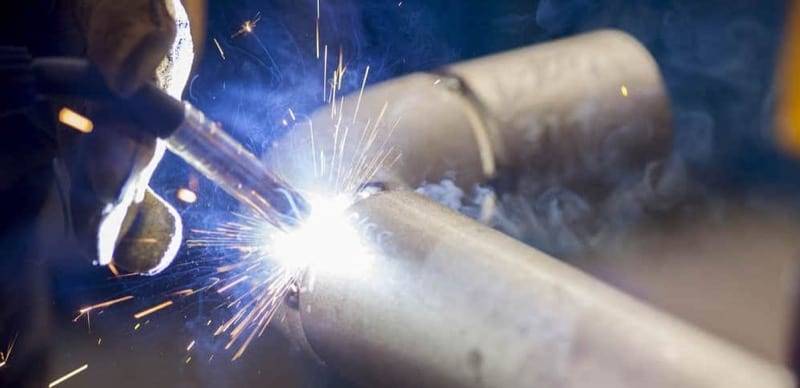
The choice of joining method for steel pipes depends on the type of installation, the pipe material, and the required installation efficiency.
Welding
Welding is the primary method of joining black steel pipes. Gas welding (oxy-acetylene) or electric welding (MMA, TIG) is most commonly used. Advantages of welding:
- permanent, hermetic connection,
- no additional fittings reducing the cross-section,
- ability to make connections in any position,
- low flow resistance at the weld point.
The disadvantage is the need for welding qualifications and the inability to disassemble the connection without cutting the pipe.
Threaded connections
Threaded connections are used in both black and galvanised pipes. These are detachable connections, which facilitates servicing of the installation. They require threaded fittings (elbows, tees, couplings, reducers) and sealing (linen tow, PTFE tape, anaerobic adhesives).
The disadvantage of threaded connections is the large number of fittings, which increase flow resistance and are potential points of leakage.
Press-fitting
A modern method used mainly for stainless steel and thin-walled galvanised pipes. It requires special fittings with EPDM or FKM seals and pressing jaws. Advantages:
- fast installation without fire or welding qualifications,
- repeatable connection quality,
- can be used in fire-hazard areas.
Standards for steel pipes
When designing installations with steel pipes, the following standards should be referenced:
- PN-EN 10255 - non-alloy steel tubes suitable for welding and threading. The standard specifies dimensions, tolerances, and technical delivery conditions. This is the primary standard for installation pipes.
- PN-EN 10217 - welded steel tubes for pressure purposes. It covers a range of parts, including non-alloy and alloy steel tubes for fluid conveyance.
- PN-H-74200 (withdrawn, replaced by PN-EN 10255) - the former Polish standard for threaded steel pipes, still frequently referenced in older design documentation.
- PN-EN 10088 - stainless steels. Specifies stainless steel grades used, among others, in installation pipes.
Advantages of steel pipes
-
Exceptional mechanical strength - steel pipes demonstrate excellent resistance to tension, compression, and bending. Even over long spans, they do not require closely spaced supports, which facilitates pipe routing.
-
Resistance to high temperatures - steel has the lowest coefficient of thermal expansion among materials used in sanitary installations. It can operate at temperatures up to 110°C (black steel) without risk of deformation. To calculate the thermal expansion of steel pipework, use the thermal expansion compensation calculator.
-
UV radiation resistance - steel pipes can be used in locations exposed to direct sunlight without material degradation.
-
Diffusion tightness - steel does not allow oxygen to permeate into the installation, which eliminates the problem of oxygen corrosion of radiators and boilers in closed systems.
-
Fire resistance - steel pipes do not burn and maintain their load-bearing capacity under fire conditions, which is why they are required in fire protection installations.
Disadvantages of steel pipes
-
Susceptibility to corrosion - black steel and galvanised steel pipes are subject to corrosion. In domestic water installations made of galvanised pipes, corrosion failures can appear after as few as 10-15 years of operation, especially with aggressive water.
-
High weight - a DN 50 steel pipe weighs over 5 kg/m, which makes transport and installation difficult, especially at height.
-
High thermal conductivity - steel pipes quickly lose heat to their surroundings, which requires the use of thermal insulation and increases energy losses.
-
Cross-section fouling - corrosion products and limescale (calcium and magnesium compounds) deposit on the inner walls of steel pipes, which over time reduces the cross-section and increases flow resistance.
-
High installation costs - although the material itself is relatively cheap, installation requires specialised equipment (threading machines, welding torches, pipe cutters) and qualified installers with appropriate certifications.
-
Condensation - moisture from the surroundings easily condenses on uninsulated steel pipes, which can lead to dampening of walls and ceilings.
Where are steel pipes still required or recommended?
Despite the development of alternative materials, there are applications where steel pipes are irreplaceable or required by regulations:
- Gas installations - steel pipes (black or galvanised) remain the primary material in natural gas and LPG installations in buildings. This is required by regulations and standards, including PN-EN 1775. If you are designing a gas installation, our low-pressure gas installation calculator may be useful.
- Fire protection installations - sprinkler and hydrant systems are made of steel pipes due to their fire resistance.
- Central heating - in large buildings (boiler rooms, heating plants, district heating networks), steel pipes remain the standard due to their pressure and temperature resistance.
- Industrial installations - where high pressures, temperatures, or aggressive mechanical environments occur.
Corrosion protection
The durability of a steel installation largely depends on proper corrosion protection:
- Hot-dip galvanising - a zinc coating 55-85 micrometres thick provides cathodic and barrier protection. Effective up to approximately 60°C.
- Anti-corrosion paint coatings - black steel pipes are painted with red lead or epoxy paints. This requires careful surface preparation (degreasing, sandblasting).
- Thermal insulation - in addition to its thermal insulation function, insulation protects pipes from ambient moisture and limits condensation.
- Corrosion inhibitors - in closed heating installations, corrosion inhibitors are added to the circulating water, forming a protective layer on the inner surface of the pipes.
- System deaeration - removing air from the heating installation significantly delays corrosion processes.
Alternatives to steel pipes
The modern market offers many alternative materials. Each has its own advantages and limitations:
- PP pipes (polypropylene) - lightweight, corrosion-resistant, easy to install (butt-fusion welding). Used in domestic water and underfloor heating installations. Limitation: low UV resistance, oxygen diffusion (in versions without an anti-diffusion layer).
- PEX pipes (cross-linked polyethylene) - flexible, corrosion-resistant, used in water and heating installations. They require press or crimp fittings.
- Copper pipes - durable, bacteriostatic, corrosion-resistant. Used in drinking water, gas, and solar installations. Disadvantage: high price and the need for soldering.
- Multilayer pipes (PEX-Al-PEX) - combine the flexibility of plastic with the anti-diffusion barrier of aluminium. Popular in heating and water installations.
None of the above materials, however, replace steel in gas installations (regulations), fire protection installations (fire resistance), or in large heating installations with high parameters.
Practical tips
- Select diameters based on calculations - never select pipe diameters by guesswork. Use the pipe diameter selection calculator or design calculations.
- Use appropriate insulation - every steel pipe carrying a medium at a temperature higher than ambient should be insulated.
- Avoid combining steel with copper - direct contact between steel and copper leads to galvanic corrosion. Use insulating (dielectric) fittings.
- Remember about expansion compensation - despite the low coefficient of thermal expansion, long sections of steel pipes are also subject to thermal expansion.
- Deaerate heating installations - air in the installation accelerates corrosion and reduces system efficiency.
- Store pipes in a dry place - black steel pipes rust even during storage. Check the condition of the inner surface before installation.
Summary
Steel pipes, despite being on the market for over a century, remain an irreplaceable material in many installation applications. The key to a durable and trouble-free steel installation is the correct selection of pipe type (black, galvanised, stainless), the appropriate joining method, and effective corrosion protection.
For designing installations with steel pipes, it is worth using the available calculation tools: pipe diameter selection calculator, pipe capacity calculator, and thermal expansion compensation calculator.
Back to articles list