
Municipal general plan by 31 August 2026 — what changes for building conditions decisions?
10 sierpnia 2026 | Regulations
On 31 August 2026 the transitional period of Poland's planning reform ends. On that day the municipal studies of conditions and directions of spatial development (studium uwarunkowań i kierunków zagospodarowania przestrzennego, below: the study) lose force. The study itself was never the legal basis for a decision on building conditions (decyzja o warunkach zabudowy, WZ) — but the date it loses force is, in the reform's transitional provisions, the cut-off from which new rules for issuing WZ decisions apply. From 1 September 2026, in a municipality without an adopted general plan (plan ogólny), a new WZ decision cannot as a rule be issued. For the designer and the investor this means one thing: on a plot with no local plan, the basis for starting design work disappears, and with it the possibility of moving on to the building design and the installation designs.
Quick answerThe studies remain in force until 31 August 2026 at the latest (Article 65(1) of the Act of 7 July 2023, as worded by the Act of 30 April 2026, Journal of Laws (Dz.U.) 2026 poz. 781). A decision on building conditions can be issued on an application filed on or after 1 September 2026 only in a municipality where a general plan has entered into force (Article 59(3) of the same act; this does not apply to closed areas (tereny zamknięte) — paragraph 4). An application that reaches the authority by 31 August 2026 inclusive is not subject to that requirement. If the case was in addition initiated before the day the study lost force in the given municipality, the new condition that the site lie within an infill development area (obszar uzupełnienia zabudowy) does not apply to it (Article 59(2)). In a municipality where the general plan entered into force earlier, the study lost force back then — and it is that date, not 31 August, that is the boundary there. Local spatial development plans in force remain valid and nothing changes for them.
Situation of the plot What you do after 1 September 2026 Plot covered by a local plan No change — you design on the basis of the MPZP, no WZ decision is needed No MPZP, the municipality has a general plan You file a WZ application, but the site must lie within an infill development area (exceptions — Article 61(1a)) No MPZP, application filed by 31.08.2026 The proceedings continue without the general plan requirement, even if the decision is issued in 2027; without the infill development area condition, provided the case was initiated before the study lost force No MPZP, municipality without a general plan A new WZ application will not lead to a favourable decision — you wait for the general plan (exception: closed areas)
Legal status — 10 August 2026. The 31 August 2026 deadline follows from the Act of 30 April 2026 amending the Spatial Planning and Development Act and certain other acts (Dz.U. 2026 poz. 781) and is the deadline currently in force. It has already been postponed twice: from 31 December 2025 to 30 June 2026 (Dz.U. 2025 poz. 1543), and then to 31 August 2026. No further postponement has been announced, and the date is tied to a milestone of the National Recovery Plan (Krajowy Plan Odbudowy, KPO) — but the history of this reform makes it worth checking the current state of the provisions before taking a business decision.

What ends on 31 August 2026 and what does it cover?
The reform was introduced by the Act of 7 July 2023 amending the Spatial Planning and Development Act (ustawa o planowaniu i zagospodarowaniu przestrzennym) and certain other acts (Dz.U. 2023 poz. 1688). It replaced the study with a new document — the municipal general plan — and set a transitional period within which municipalities were to adopt their general plans.
Under Article 65(1) of that act, municipal studies of conditions and directions of spatial development remain in force until the day the municipal general plan enters into force in the given municipality, but no longer than until 31 August 2026. Note how this provision is constructed: the study loses force in the municipality where the general plan has entered into force — so not necessarily on 31 August. In a municipality where the general plan came into force in, say, May 2026, the study ceased to apply back then, and the new rules have applied from that moment. What counts is the date the plan entered into force, not the date the municipal council adopted the resolution.
The loss of force of the study triggers three consequences:
- Decisions on building conditions. A WZ decision can be issued on an application filed on or after 1 September 2026 if a general plan has entered into force in the given municipality and, where the application concerns a site located in more than one municipality, if general plans have entered into force in all of those municipalities (Article 59(3) of the Act of 7 July 2023, as worded by the Act of 30 April 2026). This condition does not apply to closed areas (Article 59(4)).
- New local plans. From the day the study loses force, adopting a local spatial development plan or an amendment to it is possible only where a general plan has entered into force in the municipality (Article 67(4)). Exceptions include, among others, plans for which the date of public display or the start of public consultation was announced before the study lost force, and plans concerning solely the siting of a public purpose investment. A municipality without a general plan will therefore not "repair" the situation with a quick local plan for a single plot.
- Definitions that refer back to the study. Some technical provisions refer to the study directly — we will come back to this under sunlight exposure, because that trap can change the design parameters.
What the change does not cover: local spatial development plans in force remain valid (Article 67(1) of the Act of 7 July 2023). If your plot lies within the boundaries of an MPZP, the deadlines in this article do not concern you — you design on the basis of the plan, and a building conditions decision is not required at all. WZ decisions already issued also remain valid; the new five-year expiry period for decisions is discussed further below.
How does the general plan differ from the previous study?
The difference is systemic, not editorial. The study was an internal management act — it bound the municipal council when adopting local plans, but it was not a source of universally binding law and could not by itself determine the content of an administrative decision. The general plan is an act of local law (Article 13a(7) of the Spatial Planning and Development Act) and constitutes the legal basis for a decision on building conditions.
| Feature | Study of conditions | Municipal general plan |
|---|---|---|
| Legal character | Internal management act | Act of local law |
| Coverage | The whole municipality | The whole municipality (excluding internal marine waters and part of the closed areas) |
| Mandatory content | Directions of development, descriptive | Planning zones and municipal urban planning standards |
| Optional content | — | Infill development areas, downtown development areas |
| Effect on the WZ decision | Indirect — the authority examined consistency with the neighbourhood, not with the study | Direct — it is the legal basis for the decision |
| Form | Descriptive document with a graphic annex | Spatial data, published in the voivodeship official journal |
For the designer, the most important item is the last row of the table plus one concept: the infill development area. The general plan mandatorily defines planning zones and municipal urban planning standards, and may optionally designate infill development areas and downtown development areas (Article 13a(4)). The legal basis for a decision on building conditions and land development consists of the planning zones, the municipal urban planning standards and the downtown development areas (Article 13a(5), point 1), and separately — the basis for a decision on building conditions is the infill development area (Article 13a(5), point 2).
Once the general plan enters into force, the catalogue of prerequisites for issuing a WZ decision in Article 61(1) is extended by point 1a: the site is located within an infill development area. The existing conditions remain — among others, a neighbouring plot that is developed and accessible from the same public road, access to a public road, sufficient utility infrastructure, no need for a change of agricultural land use, consistency with separate regulations, and location outside the zones listed in point 6 (gas pipeline controlled zone, pipeline safety zone, area covered by a prohibition in connection with a strategic transmission grid investment) — and the new one is added as a further condition that must be met jointly with the others. The condition of being located within an infill development area does not apply, among others, to the reconstruction, extension and superstructure addition of an existing structure, or to investments that change the land development in a way other than by erecting a building structure (Article 61(1a)).
The practical consequence: a municipality that has adopted a general plan but has not designated infill development areas within it effectively closes the path to new WZ decisions for construction — even though formally it does have a general plan. So before buying a plot without an MPZP, check not only whether a general plan exists, but also whether your site falls within an infill development area and in which planning zone.
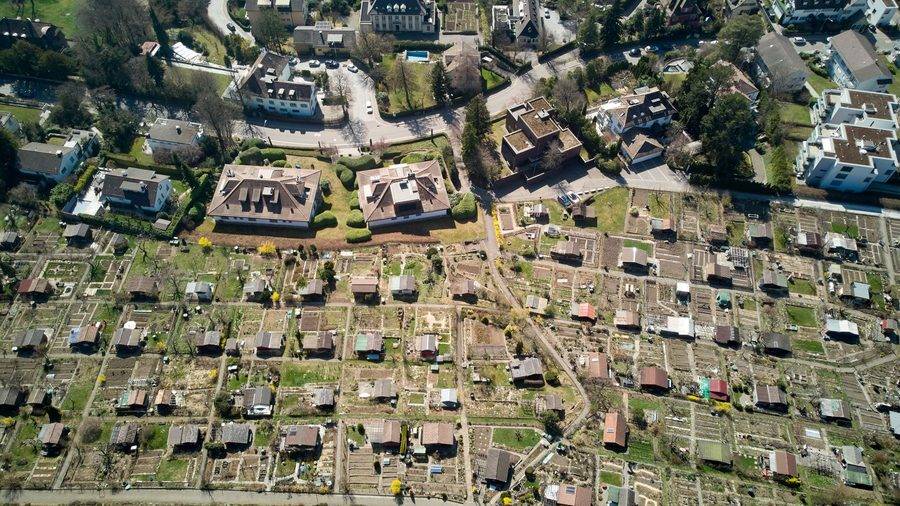
What if your municipality did not manage to adopt a general plan?
Then from 1 September 2026 the path "plot without a plan → building conditions → building design" stops in that municipality. A new WZ application filed after that date cannot end with a favourable decision until the general plan enters into force. There is no rescue provision here along the lines of "a decision based on the factual state of the neighbourhood" — Article 59(3) states the general plan requirement expressly.
What you can realistically do:
- Check whether the plot is in fact covered by an MPZP. Local plans remain in force and remove the problem entirely. That is the first thing to verify before you start counting days to the deadline.
- Establish what stage the general plan has reached in your municipality. A draft that has been through public display is a different time horizon from a draft at the stage of collecting applications. The information is public — the municipality's BIP and the Urban Planning Register.
- If you have a finished concept — file the WZ application before 1 September 2026. This is the cheapest way to keep the old rules, described in the next section.
- Check whether the investment falls within the exceptions — but do not overrate them. The only exception to the general plan requirement in Article 59(3) is closed areas (Article 59(4)). The exemption from the condition of being located within an infill development area, available for reconstruction, extension and superstructure addition (Article 61(1a)), works only once a general plan is already in force in the municipality — it does not replace one. In a municipality without a general plan, an application filed on or after 1 September 2026 will not produce a WZ decision even for an extension.
- Recalculate the investment schedule. If the general plan in the municipality is still being drafted, the realistic start of design work shifts by months, not weeks — and that is information the investor needs now, not after a refusal.
Before you commit to an expensive concept, it is worth assessing the feasibility of the plot at the level of numbers — areas, connection loads, installation needs. The preliminary project balance serves such an initial assessment, and you can check shading in the sunlight exposure calculator.
Will WZ applications filed before 31 August retain their effects?
Yes — and this is the single most important practical piece of information on the whole topic. Protection comes from the date the application is filed, not the date the decision is issued.
Article 59(3) speaks of "issuing a decision on building conditions on an application filed on or after 1 September 2026". An application that reached the authority by 31 August 2026 inclusive is therefore not subject to the requirement that a general plan exist — even if the proceedings take a year and the decision is issued in 2027.
A second provision settles the substantive rules under which such a case is examined. Article 59(2) states that in cases concerning the issue of a decision on building conditions that were initiated on or after the entry into force of the Act of 7 July 2023 and before the day the study lost force in the given municipality:
- Article 54 and Article 61(1), point 1, Article 61(2), (3) and (5a) of the Spatial Planning and Development Act apply in their previous wording,
- Article 61(1), point 1a and Article 61(1a) do not apply — that is, the condition that the site be located within an infill development area.
Together, these two provisions mean that a case filed and initiated in time is conducted without the general plan requirement and without the infill development area requirement. That is not, however, a "freeze" of the entire former legal state — Article 59(2) preserves the previous wording only of the provisions it lists, including Article 61(5a), that is the rules for delimiting the analysed area.
Three things to watch out for when filing an application right up against the deadline:
- What counts is receipt by the authority. Assume that the decisive moment is the date the application is delivered to the authority, not the date it was posted — proceedings instituted at a party's request commence on the day the request is delivered to the authority (Article 61 § 3 of the Code of Administrative Procedure, Kodeks postępowania administracyjnego, KPA). Safe options are: filing in person with a confirmation on your copy, ePUAP, or the e-Budownictwo service with an official submission receipt.
- Completeness of the application. The authority calls for formal deficiencies to be remedied under Article 64 § 2 of the KPA, and remedying them within the deadline preserves the original filing date. But an application not completed within the deadline is left without examination — and then the original date ceases to matter. Three weeks before the deadline, that is a risk not worth taking to save a single day.
- The application must have substance. A WZ application must define the boundaries of the site, the planned form of development, the characteristics of the buildings and the demand for infrastructure. An "application just in case", with no concept behind it, cannot be defended in the proceedings.
What about the WZ decisions you already hold?
The reform introduced a five-year expiry period for decisions on building conditions: under Article 64c of the Spatial Planning and Development Act, a WZ decision expires 5 years after the day on which it became legally final (prawomocna). This does not, however, work retroactively — Article 62 of the Act of 7 July 2023 excludes the application of Article 64c to decisions that became legally final before 1 January 2026 or were issued in cases initiated before 16 October 2025. Meeting either of these conditions is enough for the five-year period not to run. In other words, the "clock" in Article 64c applies only to decisions that both became legally final on or after 1 January 2026 and were issued in cases initiated on or after 16 October 2025. Older decisions do not expire after 5 years (they may expire on other grounds, for example when another applicant obtains a building permit or a local plan with different provisions is adopted for the site). For new decisions, it is worth writing the expiry date into the investment schedule next to the validity period of the utility connection conditions.
How do sunlight exposure and obstruction on the plot affect the WZ decision?
Here you have to be precise, because the trade press often confuses these two stages. The authority issuing a decision on building conditions does not, as a rule, carry out a detailed analysis of sunlight exposure time — such an analysis requires a completed design and is verified by the architectural and construction administration authority at the building permit stage. That does not mean the technical conditions are irrelevant at the WZ stage: the decision must be consistent with separate regulations (Article 61(1), point 5) to the extent that can be examined at that stage and — more importantly in practice — it sets the parameters that determine whether such a design can be defended later at all.
In a WZ decision the authority sets the building line, the development intensity, the building coverage ratio, the width of the front elevation, the building height, the roof geometry, the minimum share of biologically active area and the minimum number of parking spaces (§ 1 of the regulation of the Minister of Development and Technology of 15 July 2024, Dz.U. 2024 poz. 1116). These indicators are determined on the basis of an urban planning analysis of the area within a distance equal to three times the width of the site frontage, not less than 50 m and not more than 200 m (Article 61(5a)). If those parameters collide with tall neighbouring development, you can obtain a WZ decision and still fail to fit within the technical requirements — losing several months plus the cost of the design.
Two provisions decide this:
- § 13 of the regulation on technical conditions — obstruction. Natural lighting is considered to be provided if, between the arms of a 60° angle set out in the horizontal plane with its vertex at the internal face of the wall on the axis of the window of the obstructed room, there is no obstructing structure at a distance smaller than the obstruction height — and for structures higher than 35 m, at a distance smaller than 35 m. In downtown development these distances may be reduced by no more than half (§ 13(4)).
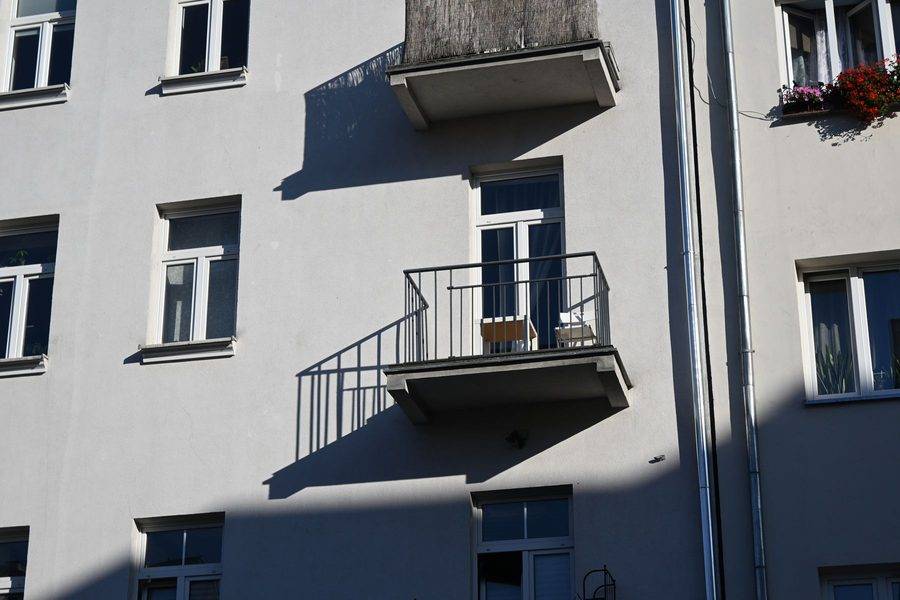
- § 60 of the technical conditions — sunlight exposure. Habitable rooms should be provided with a sunlight exposure time of at least 3 hours on the equinox days, between 700 and 1700, and rooms for the collective stay of children in a nursery, children's club, kindergarten and school (except chemistry, physics and art rooms) — between 800 and 1600. In a multi-room dwelling the requirement must be met for at least one room. In downtown development this time may be reduced to 1.5 hours, and for a one-room dwelling in such development no sunlight exposure time is specified.
And here comes the trap connected with the end of the transitional period. § 3, point 1 of the technical conditions defines downtown development by referring to the local spatial development plan and, in the absence of a local plan, to the study of conditions. Since the studies lose force by 31 August 2026 at the latest, in a municipality without an MPZP the document previously relied on when invoking the downtown relief disappears. The Spatial Planning and Development Act does use its own concept of a downtown development area — defined in Article 2, point 23 as an area located in a city with compact, intensive residential and service development, which may be designated in the general plan (Article 13a(4), point 2(b)) — but § 3, point 1 of the technical conditions does not refer to the general plan. Formally, then, it is not settled that designating such an area in the general plan by itself opens the way to the reliefs under § 13(4) and § 60(3). This is a gap between two acts that an amendment to the technical conditions should close.
The practical conclusion: do not base your concept on the 1.5-hour threshold until you have confirmed the legal basis for downtown development. Once the study loses force, the only unambiguous basis left is a provision in the MPZP. If there is no local plan, the authority's position has to be established case by case — and in the risk calculation you should assume the safe variant: 3 hours of sunlight exposure and full obstruction distances. The difference between these variants is often one storey or a few metres of shifting the building mass — a change that is free at the concept stage but, once the WZ decision has been issued, requires that decision to be amended.
You can calculate the sunlight exposure time of rooms and the effect of neighbouring development in the sunlight exposure calculator — for both equinox days, taking into account the thresholds in § 60 and the obstruction geometry in § 13. It is worth doing this before filing the WZ application, because it is an analysis that can determine the height and siting of the building, and therefore the very parameters you are applying for. A broader overview of the upcoming changes to the technical regulations can be found in the article on the new technical conditions 2026.
What to do over the next three weeks?
The order of actions for a project that does not yet have a WZ decision, where the plot is not covered by a local plan:
- Check the planning status of the plot — MPZP, general plan (adopted or still in procedure) and, if a general plan is in force: the planning zone and the infill development area.
- Calculate the feasibility of the concept — the massing that follows from the neighbourhood, sunlight exposure and obstruction, preliminary demand for utilities.
- Compile the WZ application — boundaries of the site, form of development, characteristics of the buildings, demand for infrastructure, map.
- File the application by 31 August 2026 at the latest — electronically or in person, with confirmation of receipt.
- Record the date the decision becomes legally final in the schedule — if the case was initiated on or after 16 October 2025 and the decision becomes legally final on or after 1 January 2026, the five-year period under Article 64c starts to run.
If the plot is covered by an MPZP, the deadline pressure does not concern you at all — no WZ decision is issued in that case. If there is no MPZP but the municipality already has a general plan, you are not racing the deadline either — but before commissioning the design you have to check the condition in Article 61(1), point 1a.
Summary
- The studies of conditions lose force by 31 August 2026 at the latest — earlier if the municipality has adopted a general plan.
- A WZ application filed on or after 1 September 2026 requires a general plan in force in the municipality (exception: closed areas); an application filed by 31 August is not subject to that requirement, and the infill development area condition does not apply if the case was initiated before the study lost force.
- The general plan alone is not enough — the new prerequisite in Article 61(1), point 1a as a rule requires the site to be located within an infill development area, which the municipality designates optionally (exceptions: Article 61(1a), including reconstruction, extension and superstructure addition).
- Local plans in force and earlier WZ decisions remain valid; the five-year period under Article 64c applies only to decisions that became legally final on or after 1 January 2026 and were at the same time issued in cases initiated on or after 16 October 2025.
- The downtown relief for sunlight exposure and obstruction has a solid basis only in an MPZP — once the study loses force, the reference in § 3, point 1 of the technical conditions stops working, and that provision does not refer to the general plan.
Before you file the application, check in the sunlight exposure calculator whether the parameters you are applying for can later be defended in the building design, and estimate the scope of the installations in the preliminary project balance.
Legal basis: the Act of 27 March 2003 on spatial planning and development (Dz.U. 2026 poz. 538) — Article 2, point 23, Article 13a, Article 61, Article 64c; the Act of 7 July 2023 amending the Act on spatial planning and development and certain other acts (Dz.U. 2023 poz. 1688, as amended) — Article 59, Article 62, Article 65, Article 67; the Act of 26 September 2025 (Dz.U. 2025 poz. 1543); the Act of 30 April 2026 (Dz.U. 2026 poz. 781); the regulation of the Minister of Development and Technology of 15 July 2024 on the manner of determining requirements for new development and land development in the absence of a local spatial development plan (Dz.U. 2024 poz. 1116) — § 1; the regulation of the Minister of Infrastructure on the technical conditions to be met by buildings and their location (Dz.U. 2022 poz. 1225, as amended) — § 3 point 1, § 13, § 60; the Act of 14 June 1960 — Code of Administrative Procedure — Article 61 § 3, Article 64 § 2.
Back to articles list