
U-Value Heat Transfer Coefficient - Building Envelope Insulation Guide
11 czerwca 2026 | Architecture
Heating costs account for 60-70% of total residential building operating expenses. The key parameter determining the quality of building envelope insulation is the heat transfer coefficient U. Since January 2021, stricter building insulation regulations have been in force in Poland.
The lower the U-value, the better insulated the building and the lower the heating bills. If you need to quickly check your partition's U-value, use our heat transfer coefficient calculator.
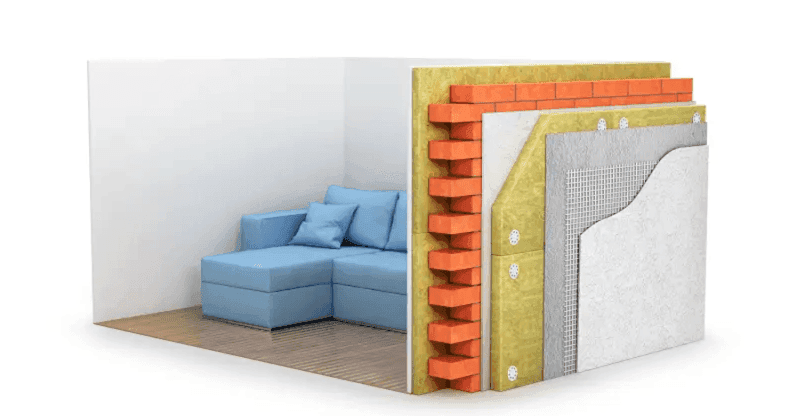
What is the heat transfer coefficient U?
The heat transfer coefficient U is a physical quantity describing how much thermal energy flows through 1 square meter of a building partition with a temperature difference of 1 kelvin (or 1 degree Celsius). The unit of U-value is watts per square meter and kelvin - W/(m²·K).
The interpretation of this parameter is simple: the lower the U-value, the better the partition's insulation. A wall with U-value = 0.18 W/(m²·K) is significantly better insulated than a wall with U = 1.5 W/(m²·K). In practice, this means that the first wall loses over 8 times less heat than the second.
The U-value is inversely proportional to the thermal resistance R of the partition. This relationship is described by a simple formula:
Where R is the total thermal resistance of the partition measured in m²·K/W. The higher the thermal resistance, the lower the U-value, meaning better insulation. It's like a thick winter jacket - the more insulating layers and the better the materials, the greater the resistance to heat loss from our body.
The practical significance of the U-value is enormous. For example, a single-family house with an external wall area of 200 m² and U-value = 1.5 W/(m²·K) (old, uninsulated building) loses about 30,000 kWh of heat annually through these walls. The same house with modern walls with U = 0.18 W/(m²·K) loses only 3,600 kWh. At an energy price of €0.14/kWh, this gives a difference of €3,696 annually on heating alone.
How is the U-value calculated?
Calculating the heat transfer coefficient requires knowledge of the partition structure - what materials compose it, in what order, and what thickness they have. The total thermal resistance of the partition consists of three elements:
Where:
- Rsi = 0.13 m²·K/W - internal surface heat transfer resistance
- ΣRlayers - sum of resistances of all material layers
- Rse = 0.04 m²·K/W - external surface heat transfer resistance (or 0.17 m²·K/W for floors on ground)
The thermal resistance of a single material layer is calculated using the formula:
Where:
- d - layer thickness in meters [m]
- λ (lambda) - thermal conductivity coefficient of the material in W/(m·K)
Lambda is a key parameter characterizing the material. The lower the λ value, the better the insulation properties. Polystyrene has λ ≈ 0.035 W/(m·K), while concrete has λ ≈ 1.7 W/(m·K) - meaning it conducts heat almost 50 times better.
Let's look at a simplified calculation example for a typical three-layer wall. Consider a wall consisting from the inside of:
- Gypsum plaster 2 cm thick (λ = 0.8 W/(m·K))
- Ceramic block 25 cm (λ = 0.3 W/(m·K))
- EPS polystyrene 15 cm (λ = 0.035 W/(m·K))
- Cement-lime plaster 2 cm (λ = 0.8 W/(m·K))
We calculate the resistances of individual layers:
- Rint. plaster = 0.02 / 0.8 = 0.025 m²·K/W
- Rblock = 0.25 / 0.3 = 0.833 m²·K/W
- Rpolystyrene = 0.15 / 0.035 = 4.286 m²·K/W
- Rext. plaster = 0.02 / 0.8 = 0.025 m²·K/W
Sum: Rlayers = 0.025 + 0.833 + 4.286 + 0.025 = 5.169 m²·K/W
Adding surface resistances: Rtotal = 0.13 + 5.169 + 0.04 = 5.339 m²·K/W
U-value: U = 1 / 5.339 = 0.187 W/(m²·K) ✓
Such a wall meets current Polish regulations requiring U ≤ 0.20 W/(m²·K) for external walls. If we wanted to check other partition variants or quickly verify calculations, it's easiest to use our heat transfer coefficient calculator, which automatically takes into account all parameters and surface resistances.
Legal requirements in Poland
According to the Regulation of the Minister of Infrastructure on technical conditions that buildings and their location should meet (taking into account changes from 2020 effective from January 2021), building partitions in newly constructed residential buildings must meet specific maximum U-values:
External walls | ≤ 0.20 W/(m²·K) |
|---|---|
Roofs and ceilings above unheated attic | ≤ 0.15 W/(m²·K) |
Floors on ground | ≤ 0.30 W/(m²·K) |
Floors above unheated basement | ≤ 0.25 W/(m²·K) |
External ceilings | ≤ 0.15 W/(m²·K) |
It's worth noting that Polish regulations are systematically tightening. In 2017, U = 0.23 W/(m²·K) was still acceptable for walls, and until 2013 even U = 0.30 W/(m²·K). This trend will continue - according to EU directives, all new buildings from 2028 should be nearly zero-energy buildings.
For energy-efficient and passive buildings, requirements are significantly more restrictive:
- Energy-efficient buildings: U ≤ 0.15 W/(m²·K) for external walls
- Passive buildings: U ≤ 0.10 W/(m²·K) for external walls
What does WT 2026 change? The amendment to the Polish technical regulations effective from 2026 does not change the U-value limits — it tightens the primary energy (EP) requirements instead, which in practice forces designing partitions with a margin below the limits above. Read more in our article New technical conditions 2026.
Failure to meet standards can have serious consequences. A building project that doesn't meet insulation requirements will be rejected by the building supervision authority. If the error is only detected during building acceptance, it may result in a correction order, which is much more costly than proper design from the start.
Therefore, it's crucial to verify all partitions at the design stage. The U-value calculator allows you to quickly check whether the designed partition meets Polish regulations - the program automatically displays legal requirements and informs about compliance.
Practical construction solutions
Theory is one thing, but how to properly design a partition that meets requirements? We'll present three typical examples of construction solutions with simplified U-value calculations.
Example 1: Three-layer external wall
The most popular solution in Polish single-family construction. From the inside:
- Gypsum plaster 1.5 cm (λ = 0.80 W/(m·K))
- Ceramic block 25 P+W, 25 cm thick (λ = 0.25 W/(m·K))
- EPS polystyrene 15 cm (λ = 0.035 W/(m·K))
- Cement-lime plaster 2 cm (λ = 0.80 W/(m·K))
Sum of layer resistances: R = 0.019 + 1.000 + 4.286 + 0.025 = 5.330 m²·K/W With surface resistances: Rtotal = 0.13 + 5.330 + 0.04 = 5.500 m²·K/W U-value = 1 / 5.500 = 0.182 W/(m²·K) ✓ meets requirement U ≤ 0.20
If we reduced the polystyrene thickness to 12 cm, the U-value would increase to about 0.22 W/(m²·K), which would no longer meet the standard. This is why precise insulation thickness design is so important.
Example 2: Pitched roof with mineral wool insulation
Roof construction from the inside:
- Plasterboard 1.25 cm (λ = 0.25 W/(m·K))
- Mineral wool between rafters 20 cm (λ = 0.035 W/(m·K))
- Mineral wool on rafters 10 cm (λ = 0.035 W/(m·K))
- Vapor-permeable membrane + battens + ceramic tiles
Sum of resistances: R = 0.050 + 5.714 + 2.857 = 8.621 m²·K/W With surface resistances: Rtotal = 0.13 + 8.621 + 0.04 = 8.791 m²·K/W U-value = 1 / 8.791 = 0.114 W/(m²·K) ✓ meets requirement U ≤ 0.15
Two-layer mineral wool arrangement - between and on rafters - effectively eliminates thermal bridges occurring at wooden rafters, which have worse insulation properties than wool.
Example 3: Floor on ground
Construction from top:
- Concrete screed with underfloor heating 5 cm (λ = 1.70 W/(m·K))
- XPS foundation polystyrene 15 cm (λ = 0.033 W/(m·K))
- Lean concrete 10 cm (λ = 1.30 W/(m·K))
- Native soil
Sum of resistances: R = 0.029 + 4.545 + 0.077 = 4.651 m²·K/W With surface resistances: Rtotal = 0.13 + 4.651 + 0.17 = 4.951 m²·K/W (note: for floor on ground Rse = 0.17) U-value = 1 / 4.951 = 0.202 W/(m²·K) ✓ meets requirement U ≤ 0.30
For floors on ground, we have much more lenient requirements (U ≤ 0.30) due to ground temperature, which doesn't fall below a few degrees Celsius even in winter.
All the above calculations can be quickly verified or other construction variants analyzed in our heat transfer coefficient calculator. The program will automatically calculate resistances, U-value and check compliance with regulations.
Common insulation mistakes and myths
Many myths and errors related to thermal insulation exist in construction and design practice. Let's explain the most important ones.
Myth 1: "The thicker the insulation, the better"
This is a common belief, but the truth is more complex. Of course, thicker insulation gives lower U-values, but there's a point where further thickness increase ceases to be economically justified. With 20 cm polystyrene we get U ≈ 0.15 W/(m²·K). Increasing to 25 cm gives U ≈ 0.12 W/(m²·K) - a 20% improvement, but the additional cost may not pay off in energy savings. Optimal thickness should be determined by analyzing the cost-benefit ratio.
Myth 2: "10 cm polystyrene is enough"
This is a dangerous oversimplification. Using EPS polystyrene λ = 0.035 W/(m·K) with 10 cm thickness in a typical three-layer wall of ceramic blocks gives U ≈ 0.28 W/(m²·K), which does not meet the current requirement U ≤ 0.20 W/(m²·K). Minimum sensible thickness is 12-15 cm. This can be easily checked by entering parameters into the calculator.
Error 1: Thermal bridges
One of the most serious execution errors. Thermal bridges occur where insulation layer continuity is interrupted by elements with higher thermal conductivity - columns, lintels, concrete rings, balconies. Even with a perfectly designed wall with U = 0.18 W/(m²·K), an uninsulated concrete ring can increase the average U of the entire wall to 0.25 W/(m²·K), or nearly 40%. Therefore, ensuring thermal insulation continuity at all partition points is crucial.
Error 2: Lack of plinth and foundation insulation
Often overlooked element. Lack of insulation in the plinth and foundation area creates a powerful thermal bridge at the wall-floor junction. Heat loss through this section can account for 15-20% of total losses through external walls. Foundations should be insulated with XPS polystyrene minimum to frost penetration depth (about 1.0-1.2 m).
Error 3: Improper selection of material λ coefficient
Not all materials with the same name have the same properties. Polystyrenes are available in classes from λ = 0.031 to 0.045 W/(m·K). Using a lower quality material (higher λ) at the same thickness results in a higher U-value. Always verify the declaration of performance (DoP) of the material and use the actual λ value of the given product for calculations, not "catalog" values.
Error 4: Neglecting surface resistances
Beginning designers sometimes forget to include heat transfer resistances Rsi and Rse in calculations. Although their value is relatively small (0.17 m²·K/W total), they can constitute a significant share in thin partitions. Good news - our U-value calculator automatically includes surface resistances, eliminating the risk of this error.
Tips for designers and contractors
Professional design and execution of thermal insulation requires following specific principles and using appropriate tools.
Recommendations for designers:
Always verify the U-value for each partition in the project. Don't rely on "typical" or "same as always" solutions. Each building has its specifics, and material manufacturers often change their product parameters. Document all design assumptions - λ values used for calculations, layer thicknesses, material types. This is protection against questions from supervision inspectors or future complaints.
Pay special attention to thermal bridges. For columns, lintels and rings, apply correction multipliers according to PN-EN ISO 6946 standard or calculate corrected U-value. In particularly problematic places, consider using thermal insulation prefabricated elements, e.g. lintels with built-in insulation.
In material specifications, always provide specific λ values required for a given material. The entry "polystyrene" is insufficient - it should be "EPS polystyrene λ ≤ 0.035 W/(m·K) thickness 15 cm". This protects against using lower quality material.
Recommendations for contractors:
Insulation thickness is not a matter of interpretation. If the project specifies 15 cm polystyrene, using 12 cm "because it's enough anyway" can result in non-compliance and the need for correction at your own expense. Use material according to the project or better (lower λ at the same thickness).
Ensure insulation layer continuity. Every gap, crack or leak is a potential thermal bridge. Lay insulation boards in stagger pattern - joints in successive layers should not overlap. Particularly important for mineral wool, which can sag over the years if not properly fastened.
When receiving materials, check the declaration of performance (DoP). The λ parameter should match the project. Don't trust only the trade name - different series from the same manufacturer can have different λ.
Auxiliary tools:
For quick verification of calculations on site or in the design office, the heat transfer coefficient calculator works perfectly. In seconds you can check whether a given combination of materials and thicknesses will meet legal requirements.
For detailed calculations including thermal bridges, it's necessary to use the PN-EN ISO 6946 standard "Building components and building elements - Thermal resistance and thermal transmittance". For more complex analyses, specialized CAD programs with building physics calculation modules are available, allowing two- and three-dimensional simulations.

Economics of insulation - is it worth it?
Proper thermal insulation is an investment that pays off through lower heating bills. Let's analyze costs and benefits.
Material and labor costs (as of 2024):
Facade insulation with 15 cm EPS polystyrene using ETICS method costs €9-19/m² with materials and labor. For a house with 200 m² wall area this gives €1,800 - 3,800. Mineral wool is more expensive - €14-28/m², or €2,800 - 5,600 for the same house. PUR spray foam is an expense of €28-47/m², or €5,600 - 9,400.
Roof insulation with 30 cm mineral wool (20 cm between + 10 cm on rafters) costs about €19-30/m². For a 150 m² roof we'll spend €2,800 - 4,500.
Floor on ground insulation with 15 cm XPS polystyrene is about €12-16/m², or €1,800 - 2,400 for 150 m² area.
Energy savings:
Let's take a typical single-family house of 150 m² usable area, heated with natural gas. External wall area 200 m², roof 150 m², floor 150 m².
Variant A - old building, poor insulation:
- Walls: U = 0.80 W/(m²·K)
- Roof: U = 0.50 W/(m²·K)
- Floor: U = 0.60 W/(m²·K)
- Annual heating energy consumption: about 35,000 kWh
- Cost at gas price €0.08/kWh: €2,800/year
Variant B - new building, good insulation compliant with regulations:
- Walls: U = 0.18 W/(m²·K)
- Roof: U = 0.14 W/(m²·K)
- Floor: U = 0.21 W/(m²·K)
- Annual energy consumption: about 10,000 kWh
- Cost: €800/year
Savings: €2,000 annually!
Return on investment:
Comprehensive thermal modernization from variant A to variant B (walls + roof + floor) costs about €7,000 - 12,000. With savings of €2,000/year, the payback period is 3.5 - 6 years. After that time, for the next decades (insulation durability is 40-50 years), we have pure savings.
For new construction, the cost difference between poor and good insulation is even lower (we're doing insulation anyway), so the payback period shortens to 2-3 years.
Impact on property value:
A building with good insulation receives a higher class in the energy certificate (A or B instead of E, F, G). According to market research, the difference in sale price between energy class A and G buildings can be 10-20%. For a house worth €140,000, that's a difference of €14,000 - 28,000 - much more than the cost of insulation.
Available grants and financial support:
The "Clean Air" program offers thermal modernization grants up to €15,500 for the lowest income households, and up to €8,700 for others. Additionally, thermal modernization tax relief is available - the possibility to deduct €12,400 of expenses on improving insulation from tax.
In summary - proper thermal insulation is not a cost, but an investment with short payback period and multi-year financial benefits.
Summary
The heat transfer coefficient U is a key parameter determining the quality of building thermal insulation. Polish regulations require: U ≤ 0.20 W/(m²·K) for walls, U ≤ 0.15 W/(m²·K) for roofs and U ≤ 0.30 W/(m²·K) for floors on ground. The calculation is based on the formula U = 1/R, where R is the thermal resistance of the partition.
The most common errors are thermal bridges, too thin insulation and improper material selection. Proper insulation pays off in 3-5 years through lower heating bills and increases property value.
If you want to check your building's insulation parameters, use our heat transfer coefficient calculator. The program will calculate the U-value, include surface resistances and verify compliance with Polish regulations.
Back to articles list