
New technical conditions for gas networks 2026 - what changes before September 21?
1 sierpnia 2026 | Gas
On September 21, 2026, the Regulation of the Minister of Economy (Minister Gospodarki) of April 26, 2013 on the technical conditions to be met by gas networks and their location ceases to apply. Not because anyone is repealing it - its statutory deadline simply runs out. The new regulation of the Minister of Energy that is meant to replace it was, as of August 1, 2026, still unsigned. For a gas network designer this means two things: it is worth knowing now what changes in distances and zones, and being aware that some of the provisions you are used to are disappearing from the regulation without replacement.
Status as of August 1, 2026. All figures and wordings of provisions in this article come from the draft of June 17, 2026 ("Draft regulation - after RCL") published on the Government Legislation Centre (RCL) website in project catalogue no. 12406952, together with its justification and the notification letter of the Legal Department of the Ministry of Energy of July 17, 2026. This is not a promulgated act. The stages "referral of the draft for the minister's signature" and "submission of the act for promulgation" remain empty in the RCL catalogue. Paragraph numbering and numerical values may still change - before citing a specific provision in a technical description, check the text promulgated in the Journal of Laws (Dziennik Ustaw).
Why does the 2013 regulation stop applying on September 21, 2026?
The reason has nothing to do with the gas industry. The Act of July 19, 2019 on Ensuring Accessibility for Persons with Special Needs (ustawa o zapewnianiu dostępności osobom ze szczególnymi potrzebami) amended Article 7 of the Building Law (Prawo budowlane) and required that the needs of persons with special needs be taken into account when technical conditions are laid down. In Article 66 of that Act, the legislator provided that the existing implementing provisions issued under Article 7(2) and (3) of the Building Law remain in force until new ones enter into force, but no longer than 84 months from the Act's entry into force.
The Accessibility Act entered into force on September 20, 2019. The 84 months expire on September 20, 2026 - and that is the last day the 2013 regulation applies. The same mechanism blows up the entire package of old technical conditions, which is why new technical conditions for buildings are being drafted in parallel.
The key difference that is easy to forget: the lapse operates by force of statute and is not conditional. If the new regulation is not promulgated in the Journal of Laws by September 20, then on September 21 there will be no applicable technical conditions for gas networks in Poland - and the 2013 provisions will not come back either. The draft § 58 sets the entry into force at September 21, 2026 precisely to avoid that gap.
What stage is the draft at, and will it make it before September 21?
The draft is listed in the Minister of Energy's legislative work register under number 19, and its documentation is published on RCL under number 12406952. The timeline looks like this:
- February 9, 2026 - referral for inter-ministerial agreement, public consultation and review. The deadline for comments was 14 days, but the stage was formally closed only on June 19, 2026. Comments were submitted by, among others, the Chamber of Commerce for the Gas Industry (Izba Gospodarcza Gazownictwa), GAZ-SYSTEM, ORLEN, Polska Spółka Gazownictwa, Gas Storage Poland, PZITS, and in the review stage - the President of the Energy Regulatory Office (URE) and the President of the Office of Technical Inspection (UDT).
- February 24 and June 1, 2026 - letters from the Government Legislation Centre with comments on the draft.
- June 17, 2026 - the date of the draft version that is today the most recent publicly available one.
- July 10, 2026 - RCL waived the legal drafting committee stage. This follows directly from the Ministry of Energy's notification letter. The draft therefore did not go through the stage that, for the technical conditions for buildings, took weeks.
- July 17, 2026 - the Ministry's Legal Department forwarded the draft to the Ministry of Development and Technology with a request for technical notification to the European Commission under Directive 2015/1535.
And this is where the real schedule risk lies. Technical notification triggers a standstill period - under Article 6 of Directive 2015/1535 as a rule three months from the Commission's receipt of the draft, during which the member state may not adopt the provisions. The letter of July 17 is a request to MRiT to carry out the notification, not the notification itself, and footnote 2 in the draft still has blanks for the date and number ("notified to the European Commission on ... under number ..."). Neither the date of effective transmission of the draft to the Commission nor the notification number can be established today from the RCL documents - and without them you cannot determine the end of the standstill.
Practical conclusion: when planning a schedule, do not assume that the new provisions will enter into force on September 21, 2026. If the standstill started at the end of July, it ends only at the end of October, and then a gap will open between the lapse of the old regulation and the promulgation of the new one. In such a period what remains is: the Building Law, fire protection provisions, PN-EN standards and operators' requirements - but not technical conditions within the meaning of Article 7 of the Building Law.
What disappeared from the draft after consultation - from 109 paragraphs to 58
This is the least reported and the most serious change. The version referred for consultation on February 9, 2026 had 109 paragraphs. The post-consultation version of June 17 has 58 paragraphs. It shrank by half, and what went missing is precisely what matters most to a designer.
You can see it even in the list of "most important changes" in the justification: in February it had nine points, in June five. Four disappeared:
- defining new materials (plastics, composite materials) - dropped from the list of the most important changes, although the material breakdown in § 4 itself remained,
- defining the requirements to be met by plastic and composite gas pipelines - the material stays permitted, the requirements for it do not,
- clarifying the provisions on strength and tightness tests of gas pipelines,
- the option of using waste energy recovery devices at gas pressure regulating stations.
In the text of June 17 there is no longer a single occurrence of the words "strength", "yield strength" or "design factor". Nor is there a reference to any Polish Standard - whereas the 2013 regulation had Annex No. 1 with a list of referenced PN standards, and in § 9 and § 11 it expressly required that the hoop stress of a steel gas pipeline with a MOP above 0.5 MPa must not exceed the product of Rt0.5 and a design factor depending on the location class (0.40 / 0.60 / 0.72), and with a MOP up to 0.5 MPa - the product of Rt0.5 and a factor of 0.4, while for a polyethylene pipeline - the product of MRS and a factor of 0.5.
RCL warned about this back in February. Its letter of February 24, 2026 stated that the draft abandoned the list of Polish Standards, that the justification does not explain the ratio legis of that approach, and that the approach itself "may make it considerably more difficult to establish the technical conditions to be met by gas networks" and exposes the regulation to the charge of failing to implement the statutory delegation. In the June 17 version the references to standards were not clarified - instead, the provisions to which the comment related were deleted.
The side effect is plainly visible in the document itself: the justification to § 5 still explains that "the value of the adopted safety factor, and consequently the strength calculations performed, depends on the location class", even though no such factor remains anywhere in the text of the regulation.
What does this change in practice? The regulation stops indicating the method of strength calculations and the parameters of pressure tests - and puts no other basis in their place. That does not mean a new basis arises automatically: as RCL itself points out, applying Polish Standards is in principle voluntary and binding only where a legal provision refers to them. Once the draft enters into force there will be no such reference, and the set of standards (PN-EN 1594, PN-EN 12007, PN-EN 1555), the IGG technical standards and the operator's requirements will have to be established and agreed separately for each specific project.
Who will be covered by the new provisions - the scope grows more than it looks
A change that made it into no list of "most important changes", yet can decide whether the regulation applies to you at all. The 2013 regulation applies to gas networks used to transport natural gas and, in § 1(2), excludes six categories: networks for technical gases and liquefied hydrocarbon gases (C3-C4), networks in common utility ducts, experimental networks, gas installations in buildings, subsea gas pipelines and networks on military premises.
The draft § 1 applies to networks used to transport gas, and § 2(4) defines gas as "natural gas and other types of combustible gas, as well as their mixtures, supplied by means of a gas network". Two exclusions remain: experimental networks and subsea gas pipelines and those above the surface of marine waters.
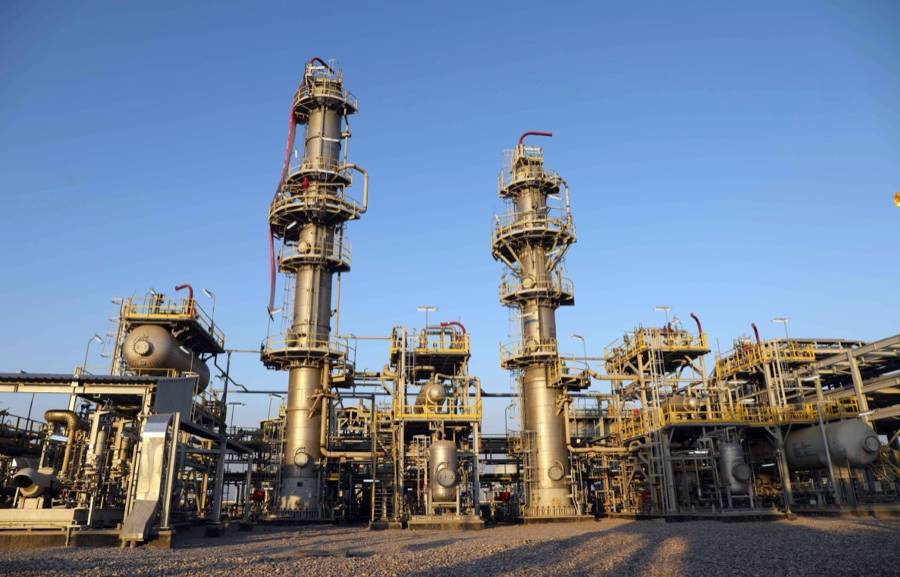
Practical effect: networks for technical gases and LPG, networks in common utility ducts and networks on military premises, today unambiguously carved out from the technical conditions for gas networks, have no such exclusion in the draft. If you are designing any of these, this is the first provision worth checking in the promulgated version.
What new materials does the draft allow?
The classification of gas pipelines by pressure stays unchanged (low up to 10.0 kPa, medium up to 0.5 MPa, increased medium up to 1.6 MPa, high above 1.6 MPa). What changes is the material breakdown:
| 2013 regulation (§ 6) | Draft of June 17, 2026 (§ 4) |
|---|---|
steel gas pipelines | steel gas pipelines |
polyethylene gas pipelines | plastic gas pipelines |
— | composite gas pipelines |
The "polyethylene" category is replaced by the broader "plastics", and composite gas pipelines appear in the technical conditions for the first time. The draft does not, however, indicate which other plastics may be used and on what terms, nor what a composite pipe is within the meaning of the regulation - the definition of a composite pipe, still present in the February version, is absent from the post-consultation text.
The caveat is significant, though: beyond permitting the material itself, the post-consultation draft says only one thing about composites - § 10(9) requires that the provisions on distances from the foundations of poles and earthing of power lines and from the earthing of transformer stations be applied to them accordingly. No strength parameters, no requirements for joints, no test rules. The point announced in February, "defining the requirements to be met by gas pipelines built from plastics and composites", has dropped out of the draft.
What changes in controlled zones, and what is an operating strip?
The widths of controlled zones do not change at all - the justification states this expressly, and comparing § 7(7) of the draft with § 10(6) of the 2013 regulation confirms it. So anyone who feared oversized corridors can relax.
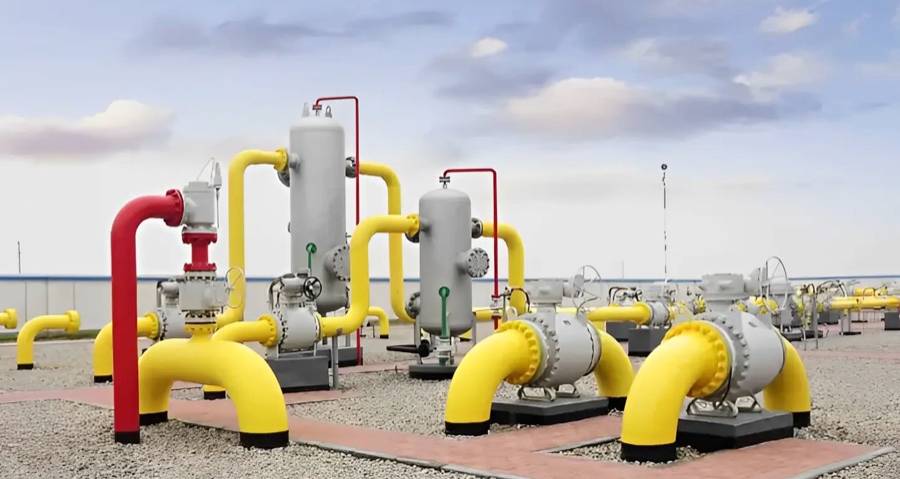
What is new is the operating strip - an area designated by the gas network operator on both sides of the pipeline axis, necessary for carrying out operating activities. Its widths are maximum, not minimum values, and they can never exceed the width of the controlled zone.
| Gas pipeline | Controlled zone | Operating strip (max.) |
|---|---|---|
MOP up to 0.5 MPa | 1.0 m | 1.0 m |
MOP above 0.5 up to 1.6 MPa | 2.0 m | 2.0 m |
MOP above 1.6 MPa, up to DN 150 | 4.0 m | 4.0 m |
MOP above 1.6 MPa, DN 150-300 | 6.0 m | 6.0 m |
MOP above 1.6 MPa, DN 300-500 | 8.0 m | 6.0 m |
MOP above 1.6 MPa, above DN 500 | 12.0 m | 6.0 m |
Beyond the operating strip, § 7 and § 13 collect several changes that show up in day-to-day work more often than new definitions do:
- The distance to trees is measured differently. In 2013, the 2.0 m (up to and including DN 300) and 3.0 m (above DN 300) were measured from the pipeline axis; the draft measures them from the outer wall of the pipeline. That is a tightening: the clearing line moves away from the axis by the pipe radius, which at DN 700 means an extra approx. 0.35 m on each side. In addition, the prohibition does not apply to gas pipelines laid trenchlessly below the level of the trees' root system.
- The same change of reference point applies to forest areas. The strip of land free of trees and shrubs, at least 2.0 m wide on both sides, was measured from the pipeline axis under the 2013 regulation (§ 20), and in the draft (§ 13) - from the outer wall. At large diameters the actual width of the cleared corridor grows by the pipe diameter.
- The ban on depots and storage yards covers more than before. The 2013 regulation prohibited setting up permanent depots and storage yards within the controlled zone; the draft deletes the word "permanent", so the ban also covers temporary storage - a construction site compound, for example.
- The rule for the road right-of-way disappears. The 2013 regulation (§ 10(5)) indicated what to do when the underground utility plans did not provide for a controlled zone for a gas pipeline built within a road right-of-way - the zone was then established in the design documentation after agreement with the road authority. The draft does not repeat this provision.
- Car parks within the controlled zone become permissible - for gas pipelines with a MOP up to 0.5 MPa, provided the surface is demountable or permeable and the solution is agreed with the operator. This unblocks a typical conflict on plots with a medium-pressure gas pipeline running along the access strip.
- Railway infrastructure elements may be located within the controlled zone after agreement with the operator.
How do distances from buildings and wind turbines change?
The most tangible substantive change is here, although it barely appears in industry announcements. Under the 2013 regulation (§ 21) the required distance of structures from the pipeline axis depended on the pipe material: the multipliers arising from the location class applied only to steel gas pipelines with a MOP above 0.5 MPa. A polyethylene pipeline with a MOP from 0.5 to 1.0 MPa always had half the width of the controlled zone, regardless of the location class.
The draft § 14 removes the material criterion and differentiates solely by pressure and location class.
| Gas pipeline | Required distance of a structure from the pipeline axis |
|---|---|
MOP up to 0.5 MPa | half the width of the controlled zone, regardless of location class |
MOP above 0.5 up to 10.0 MPa | 1x half the zone - location class I; 2x half - class II; 3x half - class III |
MOP above 10.0 MPa - buildings only | 3x half the width of the controlled zone, regardless of location class |
There are two drafting traps in this provision. First, § 14(3) refers only to a building, not to every structure - for gas pipelines with a MOP above 10.0 MPa the draft formulates no analogous rule for other structures. Second, § 14(4), which requires structures to be located with regard to an existing gas pipeline, refers only to paragraphs 1 and 2, and therefore does not cover the rule for pressures above 10.0 MPa.
An example that shows the scale: a plastic gas pipeline with a MOP of 0.7 MPa has a controlled zone of 2.0 m, so half of it equals 1.0 m.
- Under the 2013 regulation: 1.0 m - in every location class.
- Under the draft: 1.0 m in class I, 2.0 m in class II, 3.0 m in location class III.
For PE gas pipelines of increased medium pressure running through undeveloped areas, the required distance to buildings triples. This is the change worth checking in designs awaiting a permit.
Wind turbines get their own provision (§ 12(3)): for a gas pipeline with a MOP above 0.5 MPa, the distance measured between the outer wall of the pipeline and the outer outline of the turbine foundation must not be less than half the width of the controlled zone and not less than 10.0 m. For gas pipelines whose zone is determined under § 7(7), the 10.0 m threshold will always govern - the largest half-zone is 6.0 m (above DN 500), so the first component has no chance of becoming binding. It is different for gas pipelines covered by the transitional provision § 55: for old pipelines the zones from the annex reach as much as 200.0 m, and then it is half the zone that determines the required distance. The 2013 regulation had no counterpart to this provision at all.
It is also worth checking § 10(8)(1) if your design involves proximity to a low-voltage overhead line. The 2013 regulation required that the distance of the controlled zone boundary from the projection of the outermost conductor of a line up to 1.0 kV be no less than the full width of the controlled zone. The draft measures this distance from the gas pipeline and requires half the width of the zone. For a medium-pressure pipeline (a 1.0 m zone) this gives 0.5 m instead of the previous 1.5 m measured from the axis. For lines up to 15.0 kV and above, the reference point (the zone boundary) and the values of 3.0 m and 5.0 m remain unchanged.
A third change in this chapter is easy to miss, and it concerns a wider audience than gas designers. The draft § 1(1) extends the scope of the regulation to the location of other structures with respect to a gas pipeline - not only to the design and construction of the network itself. RCL challenged this in February as going beyond the statutory delegation; the ministry kept the provision and added an explanation to the justification. If it stays in the promulgated version, it will be a legal basis binding also on an architect siting a building next to an existing gas pipeline. This is reinforced by § 5(2): classifying an area into a location class applies throughout the service life of the gas pipeline, and § 14(4) requires that when locating structures the class adopted at the pipeline design stage be taken into account - not the one resulting from today's land use.
What about designs submitted before the new provisions take effect?
The transitional provisions take up three paragraphs and are shorter than most people expect:
- § 55 - for gas pipelines built before September 5, 2013 (or with a permit issued before that date), the controlled zone widths from the annex, reproduced from the 2013 regulation, continue to apply. Watch out for paragraphs 2 and 3: for ground facilities not listed in table 1 or 2 of the annex, the zone does not follow from the table - its width is set by the energy undertaking, taking into account the facility's functional parameters, the degree of impact on the network and the zones designated for facilities with similar characteristics.
- § 56 - gas pipelines built between September 5, 2013 and the date the new regulation enters into force, or those for which a building permit was issued within that period, are subject to the 2013 provisions.
- § 57 - gas pipelines for which a reconstruction permit was issued after the regulation entered into force are subject to the new provisions.
Note the wording of § 56: what decides is the date the building permit is issued, not the date the application is submitted - unlike the transitional provisions of the draft technical conditions for buildings, where the reference point is the moment of submitting the application (we described them in the article on the new technical conditions for buildings). A gas network design submitted in August 2026 but with a decision issued in November will be assessed under the new requirements - including, among others, § 14 with multipliers independent of the pipe material.
No transitional period was provided for companies. The justification explains this by saying that the regulation "does not introduce significant systemic changes, but merely adapts the existing legal norms to the current state of technical knowledge", and that the new provisions will not generate additional costs. In light of the tripling of distances for PE gas pipelines above 0.5 MPa in location class III, that claim is, to put it mildly, optimistic.
How does this affect pressure drop calculations and diameter selection?
Directly - not at all, and it is worth saying so plainly. Neither the 2013 regulation nor the draft contains hydraulic formulas, so nothing changes by force of the regulation on the diameter selection side. Pressure drop in medium- and high-pressure gas pipelines is still calculated according to industry standards and models - the quadratic formulas, Weymouth, Panhandle or AGA. We compared the methods and their ranges of application in the article on medium- and high-pressure gas pipeline calculations. To calculate a specific section, use the medium- and high-pressure network calculator, and for low-pressure installations and pipelines - the low-pressure installation calculator.
Indirectly, however, the change affects diameter selection in two places:
- The route gets more expensive or longer. Greater required distances from buildings in location classes II and III for plastic gas pipelines above 0.5 MPa mean either a detour or a drop in pressure. Lowering the MOP from 0.7 MPa to 0.5 MPa moves the pipeline out of the regime of § 14(2) into paragraph 1 - but the lost pressure has to be paid for with diameter. This is exactly the moment to calculate both variants before the route goes for approval.
- The strength side loses its footing in the regulation. Wall thickness selection, which until now started from the design factor 0.40 / 0.60 / 0.72 taken directly from § 9 of the regulation, will rely on PN-EN standards and the operator's technical requirements - with no provision imposing them. When agreeing documentation with PSG or GAZ-SYSTEM this is a formality; in a dispute over an equivalent solution it makes a difference.
What to do now
- Review the designs awaiting a decision. If the building permit may be issued after the new regulation enters into force, check the distances from buildings under § 14 - starting with plastic gas pipelines with a MOP above 0.5 MPa in location classes II and III.
- Do not copy paragraph numbers from the draft into technical descriptions. Until promulgation in the Journal of Laws, cite the 2013 regulation and treat the changes as a design assumption.
- Check whether your standard references to PN standards have so far lived solely in Annex No. 1 to the 2013 regulation. Once the new regulation takes effect, that reference disappears. The draft mandates nothing in its place, but in the technical description it is then worth stating unambiguously which standards and operator requirements have been adopted.
- Check § 1 if you are designing a network other than natural gas - LPG, technical gases, a network in a common utility duct or on military premises. The exclusions you have relied on so far have no counterpart in the draft.
- Follow RCL catalogue no. 12406952, specifically stages 11 and 12 ("referral of the draft for the minister's signature" and "submission of the act for promulgation"). As long as they are empty, every figure in this article is a figure from a draft, not from the law.